
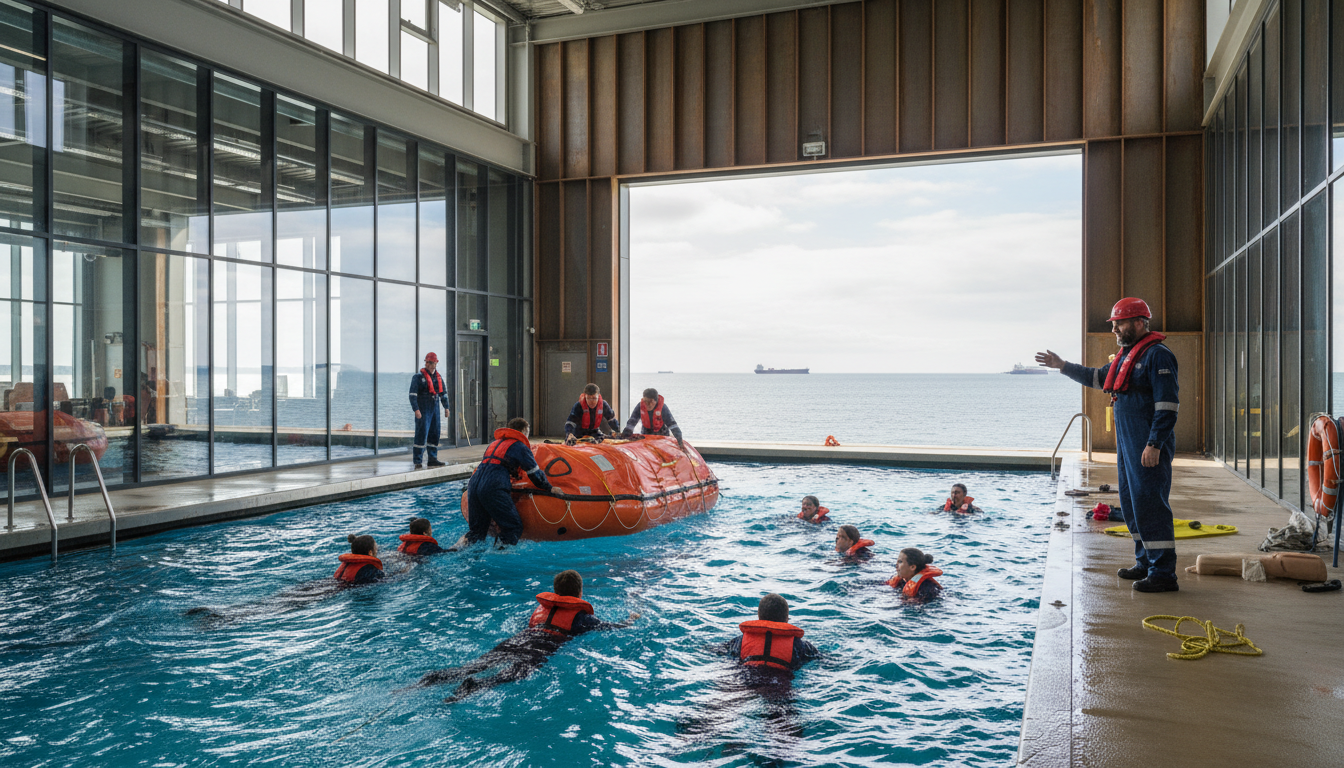
personal survival techniques course is most valuable when it helps maritime professionals make safer, more consistent decisions. This guide explains how seafarers, supervisors and crewing teams can turn the subject into a practical onboard checklist rather than another document stored in a folder.
1. Understand muster and abandon-ship signals
Understand muster and abandon-ship signals is an important part of personal survival techniques course because shipboard decisions happen under operational pressure, often with limited time to consult a manual. Start by identifying the person responsible, the relevant vessel procedure and the evidence needed to demonstrate completion. A useful exercise is to present a realistic situation, ask the learner what they would do first, and compare that answer with the ship’s documented process.
For practical implementation, supervisors should explain the expected standard before the task, observe performance where appropriate and record gaps without treating course completion as proof of competence. If the applicable flag administration, company policy or vessel procedure differs from a generic example, follow the applicable approved requirement.
2. Check personal protective equipment
Check personal protective equipment is an important part of personal survival techniques course because shipboard decisions happen under operational pressure, often with limited time to consult a manual. Start by identifying the person responsible, the relevant vessel procedure and the evidence needed to demonstrate completion. A useful exercise is to present a realistic situation, ask the learner what they would do first, and compare that answer with the ship’s documented process.
For practical implementation, supervisors should explain the expected standard before the task, observe performance where appropriate and record gaps without treating course completion as proof of competence. If the applicable flag administration, company policy or vessel procedure differs from a generic example, follow the applicable approved requirement.
3. Reinforce practical drills onboard
Reinforce practical drills onboard is an important part of personal survival techniques course because shipboard decisions happen under operational pressure, often with limited time to consult a manual. Start by identifying the person responsible, the relevant vessel procedure and the evidence needed to demonstrate completion. A useful exercise is to present a realistic situation, ask the learner what they would do first, and compare that answer with the ship’s documented process.
For practical implementation, supervisors should explain the expected standard before the task, observe performance where appropriate and record gaps without treating course completion as proof of competence. If the applicable flag administration, company policy or vessel procedure differs from a generic example, follow the applicable approved requirement.
Practical checklist before the next assignment
- Identify which duties and vessel types the requirement applies to.
- Confirm the current company, flag-state and port-state requirements where relevant.
- Keep training evidence and role-specific records accessible.
- Arrange an onboard discussion or drill to test understanding.
- Review any lessons learned and assign a follow-up owner.
Choosing appropriate training
Before enrolling, verify the course scope, delivery method, assessment and any approval or recognition required for your role. Awareness training should not be mistaken for a statutory qualification or practical competency assessment. Explore related options at Marine Pro Academy training resources and read our guide to STCW certificate verification before joining.
Frequently asked questions
Is one online course enough? Not necessarily. Required certificates, practical training and vessel familiarization depend on the task and applicable rules.
How often should the topic be reviewed? Revisit it when procedures change, a competence gap is identified, or the employer or authority requires refresher training.
What should supervisors record? Record the training or briefing completed, date, relevant duties, any observed performance and corrective actions.
The purpose of STCW survival training
For personal survival techniques, the purpose of STCW survival training matters because the correct response depends on the assigned role, the ship’s documented arrangements and the training that has actually been completed. Before taking action, identify what the employee is authorized to do, what information needs to be communicated and who is responsible for escalation. Avoid assuming that a course certificate alone establishes readiness for every vessel or every emergency.
Consider a new joiner who has completed a general online lesson but has not yet practised the vessel-specific procedure. A supervisor should ask the crew member to explain their first action, the person they would contact and the limits of their authority. The discussion should be compared with the actual ship’s approved procedures, not treated as a replacement for a required drill or practical assessment.
Vessel-specific muster arrangements
For personal survival techniques, vessel-specific muster arrangements matters because the correct response depends on the assigned role, the ship’s documented arrangements and the training that has actually been completed. Before taking action, identify what the employee is authorized to do, what information needs to be communicated and who is responsible for escalation. Avoid assuming that a course certificate alone establishes readiness for every vessel or every emergency.
In a multinational crew, different previous experience can lead to different assumptions. A short facilitated roundtable can identify where participants disagree, clarify the approved process and assign a follow-up action. Record the training gap and check understanding again after familiarization. The objective is reliable behaviour onboard, not simply a completed e-learning record.
Lifejackets and survival equipment
For personal survival techniques, lifejackets and survival equipment matters because the correct response depends on the assigned role, the ship’s documented arrangements and the training that has actually been completed. Before taking action, identify what the employee is authorized to do, what information needs to be communicated and who is responsible for escalation. Avoid assuming that a course certificate alone establishes readiness for every vessel or every emergency.
Consider a new joiner who has completed a general online lesson but has not yet practised the vessel-specific procedure. A supervisor should ask the crew member to explain their first action, the person they would contact and the limits of their authority. The discussion should be compared with the actual ship’s approved procedures, not treated as a replacement for a required drill or practical assessment.
Recognizing emergency alarms
For personal survival techniques, recognizing emergency alarms matters because the correct response depends on the assigned role, the ship’s documented arrangements and the training that has actually been completed. Before taking action, identify what the employee is authorized to do, what information needs to be communicated and who is responsible for escalation. Avoid assuming that a course certificate alone establishes readiness for every vessel or every emergency.
In a multinational crew, different previous experience can lead to different assumptions. A short facilitated roundtable can identify where participants disagree, clarify the approved process and assign a follow-up action. Record the training gap and check understanding again after familiarization. The objective is reliable behaviour onboard, not simply a completed e-learning record.
Approved practical assessment
For personal survival techniques, approved practical assessment matters because the correct response depends on the assigned role, the ship’s documented arrangements and the training that has actually been completed. Before taking action, identify what the employee is authorized to do, what information needs to be communicated and who is responsible for escalation. Avoid assuming that a course certificate alone establishes readiness for every vessel or every emergency.
Consider a new joiner who has completed a general online lesson but has not yet practised the vessel-specific procedure. A supervisor should ask the crew member to explain their first action, the person they would contact and the limits of their authority. The discussion should be compared with the actual ship’s approved procedures, not treated as a replacement for a required drill or practical assessment.
Certificate and approval checks
For personal survival techniques, certificate and approval checks matters because the correct response depends on the assigned role, the ship’s documented arrangements and the training that has actually been completed. Before taking action, identify what the employee is authorized to do, what information needs to be communicated and who is responsible for escalation. Avoid assuming that a course certificate alone establishes readiness for every vessel or every emergency.
In a multinational crew, different previous experience can lead to different assumptions. A short facilitated roundtable can identify where participants disagree, clarify the approved process and assign a follow-up action. Record the training gap and check understanding again after familiarization. The objective is reliable behaviour onboard, not simply a completed e-learning record.
First-contract document preparation
For personal survival techniques, first-contract document preparation matters because the correct response depends on the assigned role, the ship’s documented arrangements and the training that has actually been completed. Before taking action, identify what the employee is authorized to do, what information needs to be communicated and who is responsible for escalation. Avoid assuming that a course certificate alone establishes readiness for every vessel or every emergency.
Consider a new joiner who has completed a general online lesson but has not yet practised the vessel-specific procedure. A supervisor should ask the crew member to explain their first action, the person they would contact and the limits of their authority. The discussion should be compared with the actual ship’s approved procedures, not treated as a replacement for a required drill or practical assessment.
Questions to ask during familiarization
For personal survival techniques, questions to ask during familiarization matters because the correct response depends on the assigned role, the ship’s documented arrangements and the training that has actually been completed. Before taking action, identify what the employee is authorized to do, what information needs to be communicated and who is responsible for escalation. Avoid assuming that a course certificate alone establishes readiness for every vessel or every emergency.
In a multinational crew, different previous experience can lead to different assumptions. A short facilitated roundtable can identify where participants disagree, clarify the approved process and assign a follow-up action. Record the training gap and check understanding again after familiarization. The objective is reliable behaviour onboard, not simply a completed e-learning record.
Compare relevant Marine Pro Academy training
- Panama PST — check course scope, approval, assessment and employer acceptance before enrolling.
- Belize PST — check course scope, approval, assessment and employer acceptance before enrolling.
- Panama Basic Safety Bundle — check course scope, approval, assessment and employer acceptance before enrolling.
Pre-joining questions and practical checklist
Before joining, confirm your position and assigned duties; obtain the employer’s training matrix; compare the required competence with existing certificates; check the issuing centre and applicable flag approval; ask about any practical component; verify identity details and expiry or refresher requirements; and keep an approved record of the crewing team’s acceptance. After joining, complete vessel-specific familiarization and take part in required drills.
Frequently asked questions
Does a course certificate replace shipboard familiarization? No. Familiarization covers the actual vessel, assignments, equipment and procedures. Are all flags guaranteed to accept the same training? No. Verify the particular issuing approval and employer requirements. Is online study enough for every competence? Not necessarily; confirm whether approved practical activities and assessments are required.
Leave a Reply