
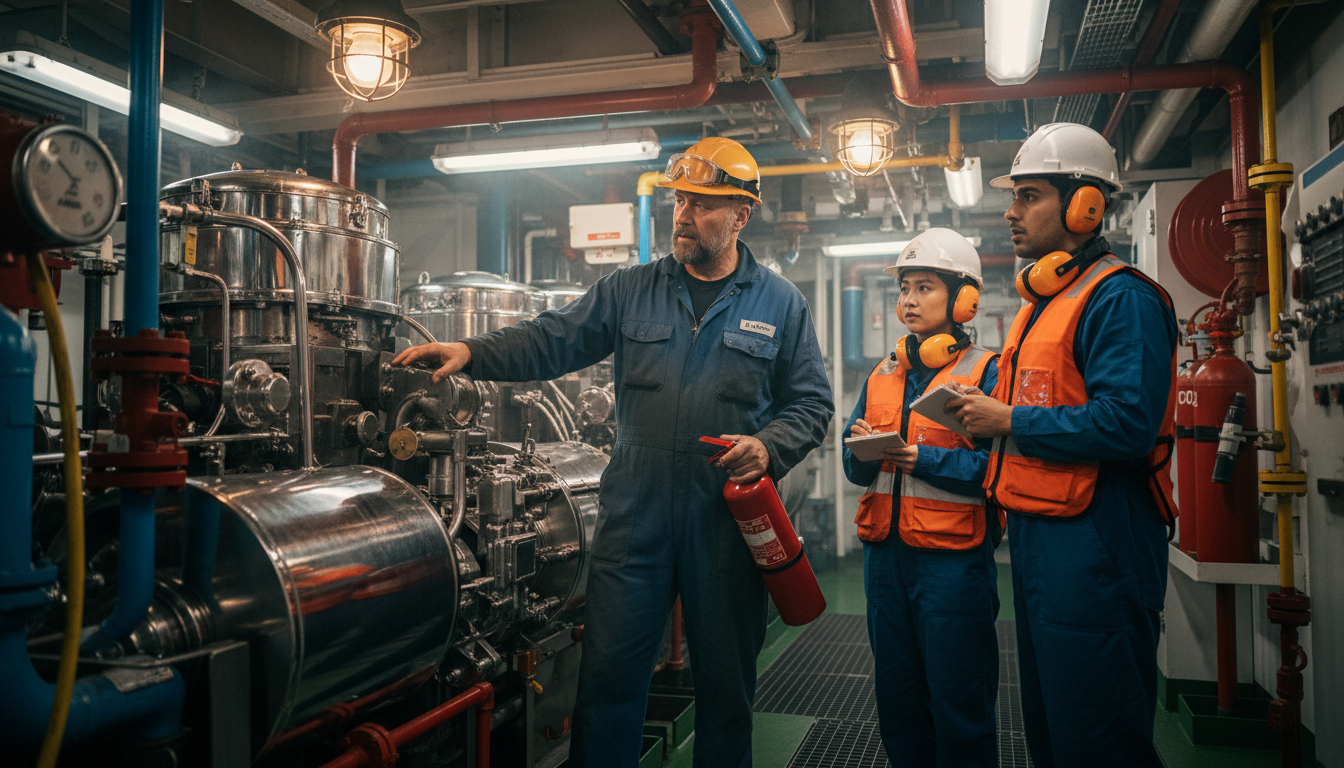
Engine room fire prevention begins before an alarm sounds. New seafarers need to recognize fuel leaks, hot surfaces, electrical hazards and unsafe housekeeping, then report concerns through the vessel’s procedures. This guide connects STCW fire prevention training with practical machinery-space familiarization and everyday watchkeeping.
Why machinery spaces demand constant fire awareness
Engine rooms combine fuels, lubricants, heat, electrical equipment and complex machinery. A small defect can become serious when it is missed, poorly reported or left unresolved. New crew should understand that prevention is a shared responsibility, but only authorized personnel should investigate or repair equipment. The ship’s safety management system, risk assessments and emergency instructions govern what happens onboard. Fire prevention training provides essential principles; vessel-specific familiarization explains actual equipment, hazards and reporting arrangements. A certificate alone does not authorize a new joiner to operate firefighting systems or intervene in a machinery-space emergency.
Recognize the fire triangle in practical terms
Fire requires fuel, heat and oxygen, and preventing contact between ignition sources and combustible material is a basic safety principle. In a machinery space, the important question is not whether a learner can recite the fire triangle but whether they notice a hazardous condition and respond appropriately. Examples include oil contamination near hot equipment, combustible waste stored incorrectly or damaged insulation. Crew should report defects promptly and follow instructions rather than attempting unauthorized repairs. Training can present photographs of fictional machinery spaces and ask learners to identify what requires escalation.
Fuel and lubricating oil leaks
Leaks can create slippery surfaces, contamination and potential fire hazards, particularly when oil reaches hot surfaces. A new crew member should learn to recognize evidence of leakage, keep clear of unsafe areas and use the designated reporting channel. They must not assume that tightening a fitting or wiping a surface is safe without authorization. Maintenance work may require isolation, permits and specific precautions under company procedures. During familiarization, supervisors can explain how defects are reported and who decides whether equipment can remain in service. The aim is early recognition and disciplined escalation.
Hot surfaces and damaged insulation
Exhaust systems and other machinery may operate at high temperatures. Damaged or missing insulation can increase the risk associated with combustible materials nearby. New crew should be trained to recognize visible defects without touching suspect equipment or removing protective coverings. A practical exercise can show images of intact and damaged insulation and ask which observations need reporting. The appropriate technical response belongs to qualified personnel following the vessel’s maintenance and safety procedures. Avoid treating a generic temperature threshold from a blog as a substitute for equipment-specific standards.
Housekeeping is a fire prevention control
Rags, packaging, waste and misplaced materials can increase hazards in working spaces. Good housekeeping means following approved storage, disposal and cleaning arrangements, not simply making a room look tidy before inspection. Supervisors should explain where different materials belong, how oily waste is handled and how to report unsafe accumulation. A pre-watch discussion can include a fictional example of absorbent material left near equipment. Ask learners why it matters, who should be informed and what action is permitted. Prevention is more reliable when housekeeping is a routine habit rather than an occasional campaign.
Electrical hazards and damaged equipment
Electrical defects can contribute to fires and other serious injuries. New crew may notice damaged cables, unusual smells, overheated equipment or improvised connections. They should avoid touching or opening equipment and report the condition using the ship’s procedures. Only competent, authorized personnel should investigate and isolate electrical systems. Training must not encourage unqualified crew to troubleshoot energized machinery. A useful scenario asks what a rating should do after noticing an abnormal smell near an electrical cabinet. The best discussion focuses on keeping people safe, accurate reporting and respecting access restrictions.
Hot work and permit-to-work controls
Welding, cutting and other hot work can introduce ignition sources. The vessel’s permit-to-work system and associated controls determine whether, when and how such work may proceed. A new joiner should understand why authorization, preparation, supervision and fire-watch arrangements matter, without assuming they are qualified to perform the work. During familiarization, explain how to recognize work that requires formal controls and whom to contact with concerns. A training case can explore a contractor preparing tools in an unexpected location. Learners should identify the need to verify authorization through the proper channel, not confront or direct the work independently.
Alarm recognition and immediate reporting
A machinery-space alarm demands attention, but the correct response depends on the alarm, location, assigned duty and vessel procedures. New crew should know how to recognize relevant signals, where to find instructions and how to report observations without delay. Do not publish a universal sequence of firefighting actions: the ship’s emergency plan and command structure control response. Training can ask learners to distinguish between reporting a suspected hazard and attempting to operate emergency equipment. Supervisors should check that each person knows their muster responsibility and how to communicate safely.
Escape routes and safe movement
Machinery spaces can be complex, noisy and difficult to navigate, particularly for newly joined personnel. Familiarization should cover approved access and escape arrangements relevant to the crew member’s work and emergency assignment. Routes and signage must be learned on the actual vessel. A new employee should not rely on memory of a different ship. Supervisors can check understanding through an authorized walkthrough, following site safety requirements. If an exit or route is obstructed, the concern should be reported and managed through the vessel’s procedures. Never assume that a shortcut is an approved emergency route.
Scenario: oil residue near a hot component
During a routine task, a new crew member notices oil residue close to a component that appears hot. They are unsure whether the condition is new or already known. The appropriate learning objective is recognizing the concern, avoiding unsafe contact and promptly reporting it to the responsible person. Ask the group what details would make the report useful: precise location, what was observed, when it was noticed and whether anyone is exposed. The exercise should not ask inexperienced learners to diagnose the defect or attempt a repair. Follow-up belongs to authorized personnel using approved controls.
Scenario: unusual smell during a watch
Imagine a rating notices a persistent unusual smell in a machinery space but sees no visible smoke. Ignoring it because an alarm has not activated may delay recognition of a problem. The crew member should follow the ship’s reporting and safety arrangements and avoid investigating beyond their competence. In a roundtable, ask learners how they would describe the observation without claiming to know its cause. Discuss whom they would contact and how they would respond if conditions changed. The purpose is accurate reporting, situational awareness and respect for the emergency organization.
STCW fire prevention and firefighting training
STCW basic training includes fire prevention and firefighting competence, but training selection must be based on the applicable requirements and accepted approval. Marine Pro Academy lists Panama Fire Prevention and Fire Fighting and Belize Fire Prevention and Fire Fighting. Verify the course scope, approved delivery and assessment requirements, certificate issuer and recognition for the intended vessel. Do not assume that an online knowledge component alone replaces practical training where required.
Training, drills and familiarization serve different purposes
A course introduces defined knowledge and competence. Shipboard familiarization teaches the specific vessel, equipment, alarms and assigned responsibilities. Drills test how personnel and teams apply approved procedures under realistic conditions. These activities complement one another and should be documented separately. A new joiner who has passed a course but cannot identify their muster station still needs further instruction. Supervisors should verify understanding through appropriate questioning and authorized observation, rather than treating a certificate as proof of readiness for every task.
A 20-minute engine room safety discussion
Begin with four minutes reviewing common fire hazards and the reporting process. Present two fictional observations: an oil leak near machinery and an unusual smell by an electrical cabinet. Give participants six minutes to decide what they would report and which actions are outside their authority. Use five minutes to compare answers with the vessel’s safety management procedures. Spend three minutes checking how crew describe location and observations accurately. Finish with two minutes identifying training gaps and follow-up owners. This discussion reinforces awareness but does not replace practical drills or approved competence assessment.
How supervisors can evaluate learning
Ask learners to explain why a condition is concerning, who should be informed and what they must not attempt. Observation during supervised familiarization can reveal whether crew notice housekeeping issues and use reporting channels. Give specific feedback, then recheck understanding after corrective instruction. Avoid assessments that reward dramatic but unauthorized action. The goal is dependable recognition and safe escalation. When a hazard appears during real operations, follow the vessel’s safety system rather than continuing an educational exercise. Keep records of the training, gaps and follow-up.
Compare related course options
The correct training pathway may include more than one basic safety component. Review the Panama Basic Safety Training bundle when several accepted competencies are needed, rather than purchasing unnecessary courses. For personnel who need additional awareness of technical hazards, Engine Room Watchkeeping training may be relevant as supplementary learning, not a substitute for required STCW firefighting competence. Always verify flag and employer recognition, course assessment and practical requirements before enrollment.
Frequently asked questions
Can a new crew member repair a suspected fuel leak? Only if authorized and competent under the ship’s procedures; otherwise report it. Does online fire awareness replace practical firefighting training? Not where approved practical training or assessment is required. Why are hot surfaces important? They can become ignition sources when combustible materials are present. What should a new joiner learn first? Their duties, reporting channels, relevant hazards and vessel-specific emergency arrangements. Which certificate should I choose? Confirm the accepted STCW course and issuing approval with the employer.
Final checklist for new engine room crew
Before beginning work, complete required training and verify its acceptance. Learn the vessel’s safety management procedures, assigned muster duties and relevant reporting arrangements. Recognize fuel leaks, combustible waste, damaged insulation and suspect electrical equipment without taking unauthorized action. Understand the limits of your competence and ask when instructions are unclear. Participate in required familiarization and drills, and act on supervisor feedback. Engine room fire prevention depends on early recognition, sound housekeeping and disciplined reporting long before an emergency response becomes necessary.
Leave a Reply