
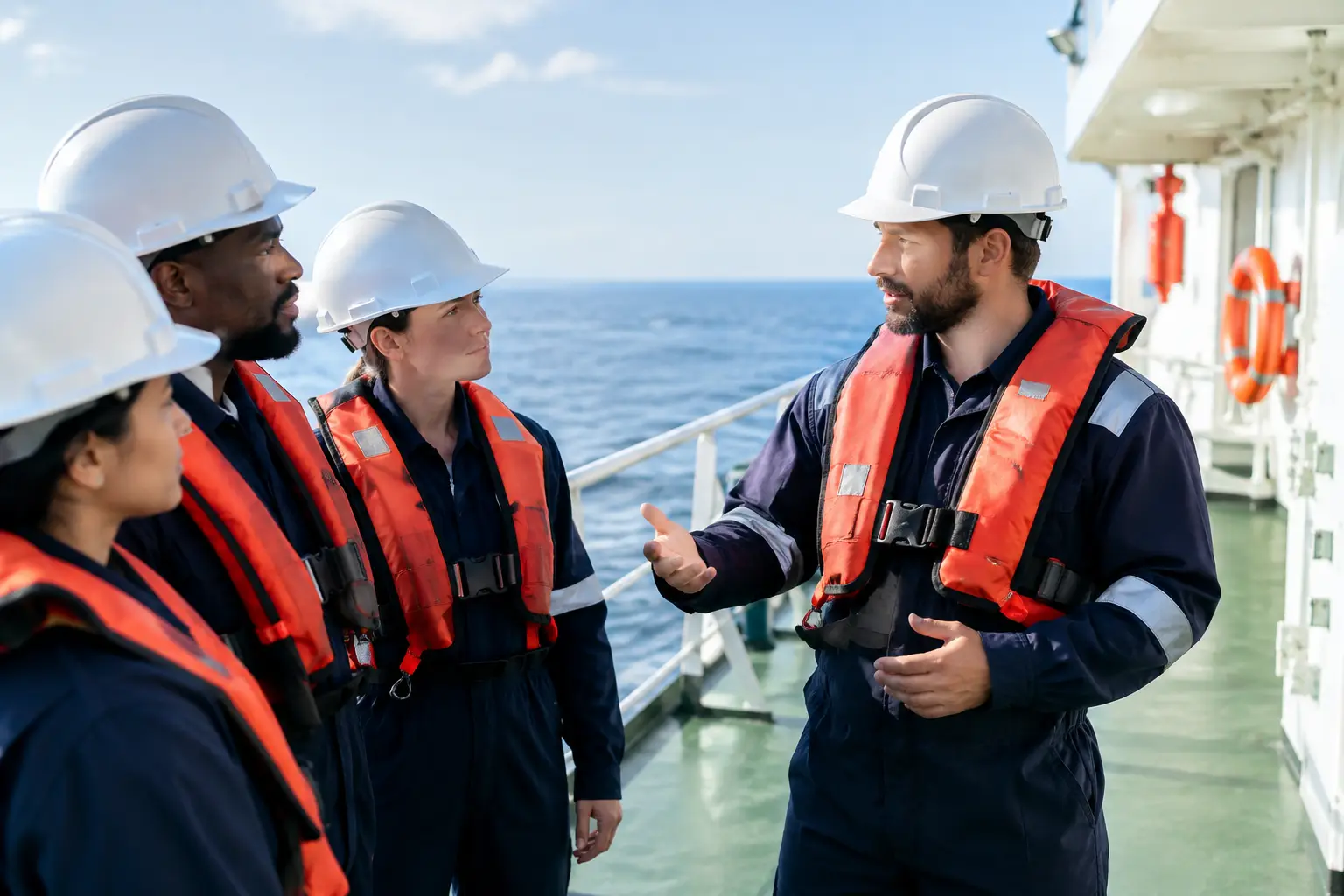
A loose handrail, an unlabeled chemical bottle, or a shortcut taken during a familiar task can turn a normal watch into an emergency.
Shipboard safety for seafarers is not limited to drills, warning signs, or certificates completed before joining a vessel. It is the daily discipline of noticing risks early, communicating clearly, and following procedures even when the ship is busy, the weather is poor, or operational pressure is high.
For new crew members, shipboard safety can initially feel like a long list of rules. For experienced seafarers, the opposite problem can develop: familiar tasks can begin to feel so routine that risks are easier to overlook.
The right approach is professional awareness.
Every crew member should understand what could go wrong, what controls are in place, and what responsibility they personally have for keeping the vessel safe.
Why Shipboard Safety Is Part of Everyday Work
A vessel is a workplace, living environment, transport system, and self-contained operating unit.
Machinery may operate continuously. Decks can become wet or slippery. Spaces are restricted. Weather conditions can change quickly, and assistance from shore may be hours or even days away.
That means small decisions matter.
Wearing the correct personal protective equipment, keeping an escape route clear, reporting damaged equipment, securing tools properly, or stopping an unsafe task can prevent a serious incident later.
Safe vessels are not necessarily vessels where nothing unexpected happens.
They are vessels where crew members recognize changing conditions, communicate effectively, respond in a coordinated way, and learn from unsafe situations before someone is injured.
This responsibility belongs to every department.
Deck, engine, galley, hotel, housekeeping, security, technical, and passenger-service teams all contribute to the same safety culture.
A strong safety culture also protects careers. Accidents can result in injury, investigations, lost working time, delayed vessel operations, and damaged professional trust.
Consistent safe behavior demonstrates the reliability and judgment employers expect from professional seafarers.
Start With Your Own Readiness
Before any task begins, personal readiness is one of the first safety controls.
Fatigue, dehydration, medication side effects, stress, illness, and poor sleep can reduce concentration and reaction time.
At sea, these factors may combine with:
- vessel movement
- heat
- noise
- long working hours
- demanding watch schedules
- unfamiliar operations
If you feel unable to complete a task safely, do not ignore it.
Raise the concern through the correct reporting line.
The same applies if an instruction is unclear or you do not fully understand the task.
Speaking up gives the team an opportunity to reassess the work before a mistake becomes an accident.
Use the Correct PPE
Personal protective equipment, or PPE, must match the specific task and hazard.
Depending on the work, this may include:
- safety shoes
- gloves
- hard hats
- eye protection
- hearing protection
- respiratory protection
- protective clothing
- fall-arrest equipment
PPE only works when it is suitable, correctly fitted, properly maintained, and used consistently.
It is also important to remember that PPE is normally the final layer of protection.
It should not replace proper planning, engineering controls, safe operating procedures, or effective supervision.
Follow Procedures — But Keep Assessing the Situation
Shipboard procedures provide a structured way to perform work safely.
They are especially important for higher-risk operations such as:
- enclosed-space entry
- hot work
- working aloft
- lifting operations
- bunkering
- electrical work
- machinery maintenance
- working near moving equipment
Permits, checklists, toolbox talks, and risk assessments can sometimes feel repetitive.
However, each serves a purpose.
They help identify hazards, assign responsibilities, confirm controls, and make sure everyone involved understands how the job should be carried out.
But completing a checklist does not mean the risk has disappeared.
Conditions can change.
Weather may deteriorate. Another team may begin working nearby. Equipment may behave differently than expected. The vessel may suddenly roll or pitch.
If the actual conditions no longer match the original plan, stop and reassess.
A useful question before beginning any task is:
What could harm someone here, and what is preventing that from happening?
If the answer is unclear, ask before continuing.
A short delay is usually far less serious than proceeding with uncertainty.
Use Toolbox Talks Properly
A toolbox talk should never become a signature exercise completed simply because a procedure requires it.
It is an opportunity for everyone involved in the task to understand:
- the job
- individual responsibilities
- hazards
- control measures
- communication methods
- emergency arrangements
- stop-work authority
Crew members who are new to the vessel or unfamiliar with the task should be encouraged to ask questions.
This is particularly important on multinational vessels where crew may have different levels of English proficiency.
Avoid vague instructions such as:
“Be careful.”
Explain the actual hazard instead.
For example:
“The deck beside the hatch is slippery.”
Or:
“No one enters the space until the atmosphere test has been completed and confirmed.”
Clear instructions reduce misunderstanding.
Prevent Everyday Shipboard Injuries
Many shipboard injuries do not happen during major emergencies.
They happen during ordinary work.
Common causes include:
- slips and trips
- falls
- incorrect manual handling
- hand injuries
- unsecured tools
- poor housekeeping
- rushing familiar tasks
Keeping a work area organized is therefore a major part of shipboard safety.
Walkways, stairs, doors, and emergency exits should remain clear.
Spills should be cleaned promptly.
Wet areas should be identified until they are safe.
Crew should use handrails when moving on stairs, particularly when the vessel is rolling or pitching.
Tools and portable equipment should also be secured properly.
Never assume an object will remain in place during sudden vessel movement.
Take Manual Handling Seriously
Manual handling injuries can develop from one heavy lift or from repeated poor technique.
Before lifting anything, consider:
- its weight
- its shape
- where it needs to go
- obstacles along the route
- whether mechanical assistance is available
- whether another crew member should help
A safe lift is not about proving strength.
It is about controlling the load safely without injuring yourself or someone nearby.
Protect Your Hands
Hand injuries are common because hands are involved in almost every shipboard task.
Keep your hands away from:
- pinch points
- suspended loads
- rotating machinery
- closing doors
- mooring lines under tension
- moving equipment
Gloves can provide important protection, but they must also be suitable for the task.
Around rotating machinery, inappropriate gloves can create additional danger.
Always follow the vessel’s procedure and task-specific instructions.
Emergency Preparedness Is a Crew Skill
Emergency preparedness only works when crew know what to do before an emergency occurs.
Regular shipboard emergency drills help crew practice their responsibilities for situations such as:
- fire
- abandon ship
- man overboard
- flooding
- security incidents
- medical emergencies
Every crew member should know:
- alarm signals
- muster station
- assigned emergency duties
- escape routes
- location of basic emergency equipment
Do not treat a drill as an interruption to normal work.
Use it to identify practical gaps in your knowledge.
Ask yourself:
Can I reach my muster station from my current work area?
Do I know my emergency duties?
Do I know the nearest alternative escape route?
Could I help a new crew member find the correct muster location?
These simple questions matter when an emergency becomes real.
Communicate Clearly During Emergencies
Accurate communication is essential when something goes wrong.
When reporting an emergency, provide clear information about:
- location
- type of incident
- immediate danger
- injuries
- missing persons
- action already taken
Avoid assumptions and unverified information.
The bridge, emergency team, and vessel leadership need reliable facts to make decisions quickly.
Report Near Misses
A near miss is an event that causes no injury or damage but could have resulted in an accident.
Examples may include:
- a dropped object landing close to another crew member
- a fire door found almost blocked
- a loose fitting discovered before it fails
- a person nearly slipping on an untreated spill
Near misses are valuable warning signs.
Reporting them allows the vessel to correct unsafe conditions before the same situation causes an injury.
Some crew hesitate to report near misses because they fear blame or think the event was too minor.
A strong safety culture focuses on learning.
The objective should be to understand how the unsafe condition developed and how it can be prevented from happening again.
When making a report, describe:
- what happened
- where it happened
- when it happened
- conditions at the time
- immediate action taken
Good reporting can help supervisors identify patterns across departments, watches, vessels, or operations.
Training Keeps Safety Knowledge Current
STCW Basic Safety Training provides core safety knowledge and competencies for seafarers.
But safety competence should continue developing onboard through:
- familiarization
- drills
- supervised practice
- refresher training
- company procedures
- practical experience
Training requirements can differ depending on your:
- flag state
- vessel type
- rank
- department
- employer
This is why seafarers should regularly check their certificates, endorsements, medical documentation, and other joining requirements before accepting a new contract.
Different departments also face different risks.
A hospitality crew member may need strong awareness of emergency duties, passenger care, housekeeping hazards, and safe practices in public areas.
Deck crew may require greater familiarity with mooring operations, lifting equipment, working aloft, and deck machinery.
Engine personnel must manage risks involving machinery, electrical energy, hot surfaces, chemicals, and enclosed spaces.
The principles of safety are shared across the vessel, but the hazards can be very different.
Check Whether Your Maritime Training Is Accepted
Completing a course does not automatically mean it will meet every employer or administration requirement.
Before enrolling, check whether the course is suitable for your intended purpose.
Our guide on whether virtual maritime courses are accepted explains why course acceptance can depend on the issuing authority, flag administration, employer, and certificate type.
This is especially important when training is required for:
- vessel joining
- promotion
- flag-state documentation
- Seaman Book applications
- company compliance
Marine Pro Academy provides online maritime training and certification guidance designed to help seafarers understand their options before committing to a course.
Always confirm the specific requirements that apply to your employment and vessel.
Build Safety Into Your Professional Habits
The best time to prevent an accident is before anyone has to respond to an emergency.
Check your work area.
Question unclear instructions.
Use the permit system properly.
Report damaged equipment.
Take toolbox talks seriously.
Report near misses.
Participate properly in drills.
None of these actions is complicated.
Their effectiveness comes from crew members performing them consistently.
A strong safety culture is built one task, one watch, and one decision at a time.
Whether you are starting your first contract or have spent years at sea, maintaining professional awareness protects your colleagues, your vessel, your passengers, and your career.
Safety at sea is not something you complete once.
It is something you practice every day.
Leave a Reply