
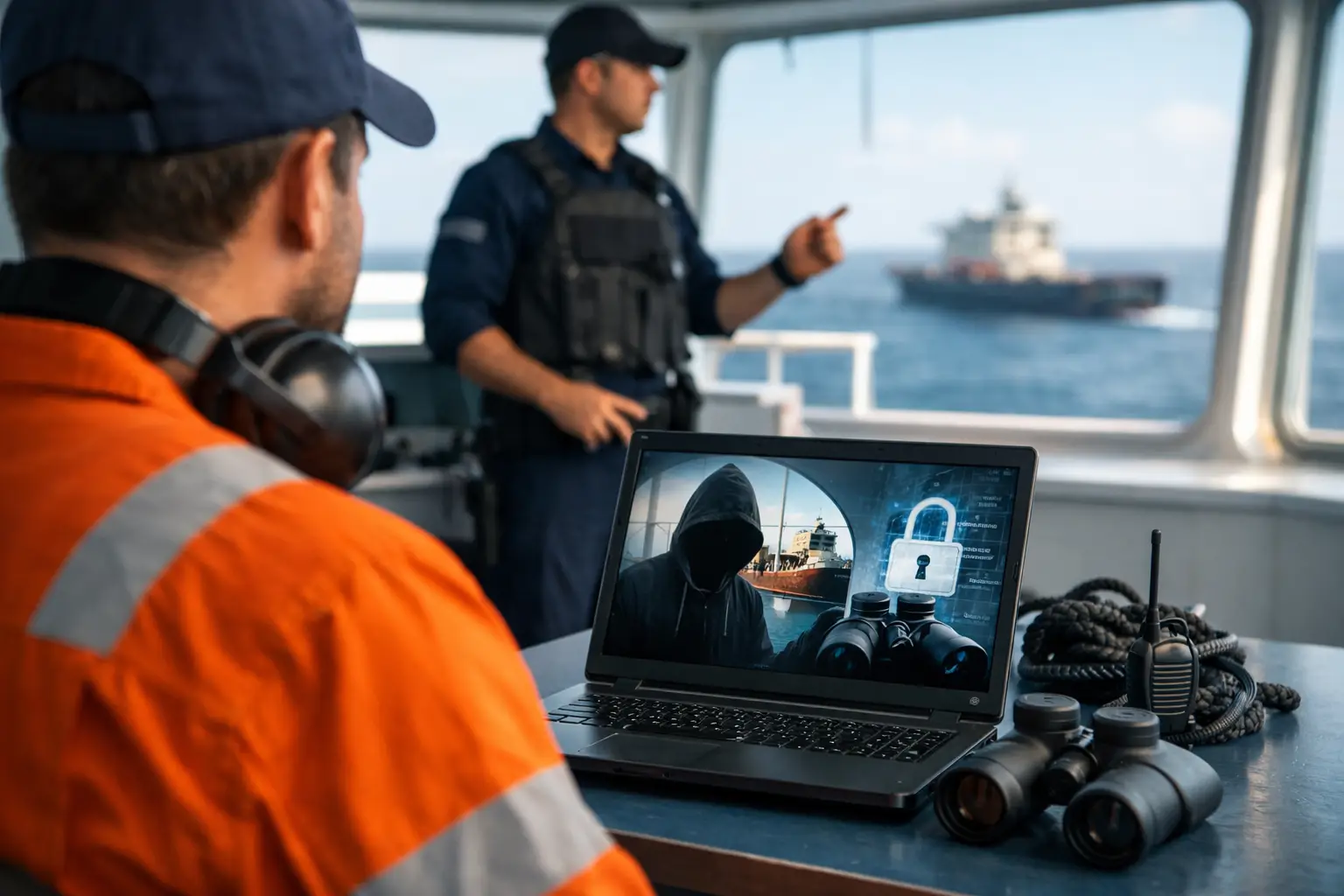
A missed security certificate can hold up a joining date just as quickly as a medical or passport issue. That is why a proper security awareness course review matters for seafarers who need training that is compliant, fast to complete, and clearly accepted for shipboard employment.
What this course is meant to do
Security Awareness training is not a box-ticking exercise. Under STCW security provisions, it is designed for seafarers without designated security duties who still need to recognize threats, follow ship security procedures, and respond appropriately onboard.
In practical terms, the course should prepare a crew member to identify suspicious behavior, understand access control, recognize restricted areas, and support the vessel security culture without overstepping into the responsibilities of personnel with advanced security duties. If a course does not make that distinction clear, it is already missing something important.
For most crew, the value is straightforward. You need a certificate that aligns with international requirements, but you also need training that makes sense in the context of real vessel operations. Good training does both.
Security awareness course review: what actually matters
A course can look professional on the surface and still create problems later. In this security awareness course review, the strongest indicators are not flashy dashboards or long sales copy. They are approval status, course scope, delivery quality, and how clearly the provider explains acceptance.
The first point is compliance. Seafarers should check whether the course is built around STCW requirements and whether it is issued through an approved framework recognized by the relevant flag or authority. If that information is vague, delayed, or buried, that is a warning sign. Security training affects employability, so approval should be obvious, not something you have to chase through support messages.
The second point is relevance. A useful course does not overload basic-level learners with content intended for ship security officers. It should stay focused on awareness, reporting, prevention, and onboard security culture. When the level is wrong, seafarers lose time and often finish with less clarity than they started with.
The third point is speed without confusion. Most crew do not have the luxury of spending weeks comparing providers or waiting for administrative follow-up. A course should allow secure enrollment, immediate access, straightforward study flow, and a clear path to certificate issuance. Efficient delivery is not just convenient. For many seafarers between contracts, it is the difference between being ready and being delayed.
What a good course should cover
The content should be practical and tightly aligned with shipboard realities. At minimum, the course should explain maritime security threats, the meaning and purpose of security levels, methods used to bypass protective measures, and the importance of vigilance in everyday operations.
It should also cover how to recognize potential security risks, why reporting procedures matter, and how crew members contribute to the Ship Security Plan through routine discipline. This includes topics like handling unaccompanied baggage, observing access points, recognizing unusual behavior, and understanding why security procedures can change quickly in port or transit.
The best courses keep the material grounded. Crew should finish knowing what to do if they notice something irregular, who to report to, and why small lapses can create larger vulnerabilities. If the content stays too theoretical, it may satisfy a syllabus on paper while doing very little for onboard readiness.
Where some online courses fall short
Online delivery is now a major advantage for seafarers, but not every online course is built well. Some providers simply convert a classroom handout into a screen-by-screen presentation. That may be enough to pass a simple assessment, but it often leads to poor retention.
Another issue is weak administrative support. A course may be technically available online, yet still involve delays in identity checks, unclear instructions, or slow certificate release. For a seafarer trying to complete documents before mobilization, those delays matter.
There is also the question of credibility. If a provider focuses heavily on price and barely explains compliance, caution is justified. Cheap training that is later questioned by an employer or manning agency is rarely a saving. It usually becomes a second purchase.
Security awareness course review: online vs classroom
For many seafarers, online training is the more realistic choice. Travel to a physical center can cost more than the course itself, especially when you are between countries or already onboard. Online access also allows faster completion around watch schedules, transit days, or short leave windows.
That said, classroom delivery can still suit some learners, particularly first-time entrants who prefer direct instructor interaction or need extra confidence with maritime terminology. The right choice depends on your timeline, learning style, and the provider’s approval structure.
For experienced crew, online often wins on efficiency. The trade-off is that the course must be well designed. If navigation is poor, instructions are unclear, or support is slow, the advantage disappears quickly.
How to judge whether a provider is worth trusting
Start with what the provider says about approval and acceptance. You should be able to identify the compliance basis of the course without guesswork. The provider should also explain who the training is for, what certificate is issued, and how long the process usually takes.
Next, look at the learning experience. Is the course structured in a way that helps you complete it efficiently, or does it feel padded? Seafarers do not need unnecessary modules added to make a program look larger than it is. Direct, relevant training is usually a better sign than volume.
Support matters as much as content. If you are traveling, changing ports, or handling multiple documents at once, fast response times can be critical. A reliable provider understands that training is part of a larger compliance timeline, not an isolated purchase.
This is where platforms built specifically for seafarers tend to stand out. Marine Pro Academy, for example, is designed around the practical constraints crew face between contracts, with an emphasis on compliant online training, faster completion, and reduced administrative friction.
Common mistakes seafarers make when choosing security training
One common mistake is choosing based only on price. Another is assuming all Security Awareness courses are equivalent because the course title sounds familiar. In practice, acceptance, support quality, and certificate handling can vary significantly.
A third mistake is waiting too long. Security training often gets pushed down the list behind visas, medicals, and travel plans, even though it can affect the same joining timeline. Completing it early reduces pressure and gives you time to resolve any document questions.
Some crew also fail to confirm whether they need Awareness or training for personnel with designated security duties. Those are not interchangeable. If your role includes assigned security responsibilities, the basic awareness course may not be enough. Matching the certificate to the role is essential.
What the best option looks like for busy crew
The strongest course is usually not the one with the most marketing. It is the one that makes compliance clear, lets you start immediately, keeps the content relevant, and issues documentation without unnecessary delay.
For active seafarers, the ideal setup is simple. You enroll securely, study anytime, complete the required assessment, and receive a certificate that fits your employer or manning requirement. No uncertainty, no repeated follow-up, and no wasted time chasing paperwork.
That is the standard a security course should meet. Security Awareness training is basic in level, but the consequences of getting it wrong are not basic at all. A poor course can slow down deployment, create extra cost, and force you to repeat training under pressure.
The better approach is to choose a provider that treats the course the way seafarers experience it – as part of a larger readiness process tied directly to work, compliance, and income.
If you are comparing options, do not ask only whether the course is available. Ask whether it is approved, relevant to your role, efficient to complete, and supported well enough to keep your joining timeline on track. That is the kind of decision that saves time when time is the one thing most crew do not have.

Leave a Reply