
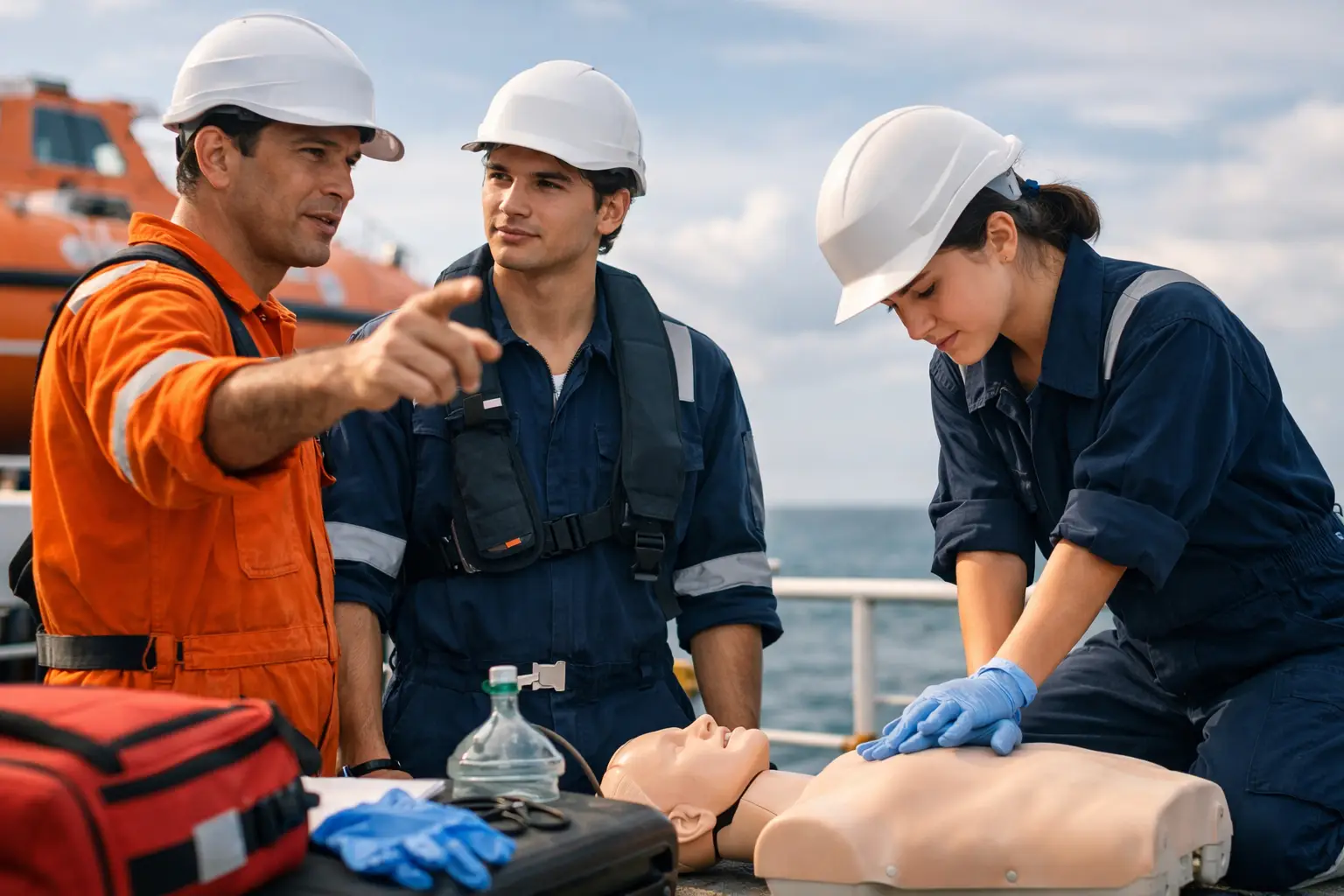
A vessel can be a demanding workplace long before an emergency occurs. New crew members must understand how to work safely with others, follow onboard procedures, respond to injuries, and recognize when a situation requires immediate escalation. That is where PSSR and EFA explained becomes more than a certification question. These two STCW safety courses build practical awareness that supports safe operations from the first day onboard.
PSSR and EFA are commonly included within Basic Safety Training requirements for seafarers. They cover different competencies, but both are fundamental to shipboard readiness. Understanding the difference helps you choose the correct training pathway, present the right documents to an employer, and avoid last-minute delays before embarkation.
What Is PSSR?
PSSR stands for Personal Safety and Social Responsibilities. It is an STCW safety training module intended to prepare seafarers for the working environment onboard a ship.
The course is not primarily about fighting fires, launching survival craft, or providing clinical treatment. Its focus is the everyday conduct, safety awareness, and professional responsibilities expected of crew members at sea. It gives new and experienced seafarers a clear framework for working safely within a structured shipboard team.
PSSR training is aligned with the competence requirements in STCW Code Section A-VI/1. It is generally required for seafarers who will serve onboard vessels covered by STCW requirements, particularly those beginning their maritime careers or completing their initial basic safety training.
What You Learn in a PSSR Course
A properly structured PSSR course addresses the realities of living and working in a confined, multicultural, safety-critical environment. Topics typically include safe working practices, emergency procedures, shipboard organization, effective communication, fatigue awareness, pollution prevention, and the importance of following orders and established procedures.
It also covers the human side of safety. Crew members need to understand how behavior affects operations. A shortcut during a routine task, poor communication during a handover, or failure to report a hazard can create risk for the entire vessel.
PSSR also introduces the responsibilities of individuals within the shipboard safety system. This includes recognizing alarms, knowing where to find emergency information, using personal protective equipment correctly, and cooperating with colleagues during drills and real emergencies.
For entry-level crew, this course can be especially valuable because it explains standards that may not be obvious to someone who has not worked at sea before. Onboard life has clear reporting lines, operating procedures, and expectations for teamwork. PSSR helps make those expectations practical before you join the vessel.
What Is EFA?
EFA stands for Elementary First Aid. It is the STCW module that prepares seafarers to take immediate, basic action when a person is injured or becomes ill onboard.
An EFA certificate does not make a seafarer a medic, nurse, or doctor. It confirms that the holder has received training to recognize common medical emergencies, provide initial assistance within their competence, and seek further help through the vessel’s established medical procedures.
At sea, professional medical support may be hours or days away. The first few minutes after an injury can matter. A crew member who can assess the scene, protect themselves and the casualty, call for assistance, and provide appropriate basic aid contributes directly to a safer outcome.
What You Learn in an EFA Course
Elementary First Aid training is based on practical response. Course content commonly includes assessing an emergency, maintaining a clear and safe response, placing an unconscious person in the recovery position, controlling bleeding, treating burns and scalds, responding to shock, and assisting with rescue and transport of a casualty.
Training also addresses the actions required when a person needs immediate life-support measures. The goal is not to replace advanced medical care. It is to make sure a seafarer can respond calmly, correctly, and without creating additional danger while waiting for the designated onboard responder or external medical advice.
The STCW competence standard for Elementary First Aid is found in Section A-VI/1. Like PSSR, it is commonly part of initial Basic Safety Training and may be requested by employers as part of a complete pre-employment document package.
PSSR vs. EFA: The Key Difference
The simplest distinction is this: PSSR prepares you to work safely and responsibly as part of the ship’s crew, while EFA prepares you to provide immediate first aid when someone is injured or ill.
PSSR is broad and prevention-focused. It covers safe behavior, teamwork, emergency awareness, and personal responsibility across everyday shipboard operations. EFA is incident-focused. It addresses what to do when a casualty requires basic medical assistance.
Neither course replaces the other. A seafarer may know how to respond to a bleeding injury through EFA training, but still need PSSR knowledge to understand reporting procedures, communicate effectively with the team, and operate safely in the first place.
Together, the courses support a core maritime principle: safety depends on both prevention and response.
Are PSSR and EFA Required for Your Job?
In many cases, yes. PSSR and EFA are included in the standard STCW Basic Safety Training package required for seafarers joining merchant vessels, cruise ships, offshore units, ferries, and other commercial operations. However, your exact requirement depends on your position, the vessel type, the flag administration, the employer, and the route or trade involved.
A hotel department crew member on a cruise vessel, for example, may need the same foundational STCW safety competencies as a deck or engine cadet because all personnel must be prepared for emergencies. A seafarer with specialized duties may also need additional certificates beyond Basic Safety Training.
Do not assume that a course with a similar name will be accepted. Before enrolling, check the certificate requirements stated by your employer or crewing agency. Confirm that the training is approved by the relevant flag administration and issued in a format that matches the documentation they request.
This matters because employment delays are often caused by document mismatches, not by a lack of training. A certificate may be valid but issued under an approval, course code, or delivery arrangement that does not meet the employer’s specific requirement.
How PSSR and EFA Fit Into Basic Safety Training
PSSR and EFA are commonly completed alongside two other foundational STCW modules: Personal Survival Techniques and Fire Prevention and Fire Fighting. Together, these courses establish a baseline for emergency preparedness and safe conduct at sea.
The full package is often described as STCW Basic Safety Training or Basic Training. Still, course names and packaging can vary by training provider and flag administration. Always review what is included rather than relying only on the package title.
For a first-time applicant, completing the full approved pathway is usually the most efficient approach. For an active seafarer, the right route may depend on which certificates are already held, their issue dates, whether refresher training is required, and the hiring company’s policy.
Some employers request recent training even when a certificate does not have a simple universal expiration date printed on it. Others may require refresher evidence for specific competencies or set internal recency standards. Your joining instructions and company document checklist should guide the final decision.
What to Check Before You Enroll
Speed matters between contracts, but approval and acceptance matter more. Before starting any PSSR or EFA course, confirm four practical details:
- The course is approved by an appropriate flag administration and aligned with the relevant STCW competence standard.
- The delivery method is accepted for your intended certificate pathway, including any required assessments, practical elements, or identity verification.
- Your certificate will show the correct course title, approval details, completion date, and learner identification information.
- Your employer, crewing agency, or vessel operator accepts the issuing authority and training arrangement.
Keep clear digital copies of your certificates and supporting records, but carry originals when your joining instructions require them. A clean document folder can save hours when you are traveling, completing a visa process, or responding to a last-minute request from a recruiter.
Why These Courses Matter Beyond Compliance
PSSR and EFA are often treated as boxes to check before joining a ship. That approach misses their operational value.
PSSR helps establish the habits that prevent incidents: listening during safety briefings, respecting permit systems, reporting unsafe conditions, using protective equipment, and communicating clearly across departments. EFA gives a crew member the confidence to take controlled action when an injury occurs instead of freezing or making the situation worse.
On a vessel, every crew member contributes to the safety culture. You may not be the officer in charge or the designated medical person, but you are still part of the response chain. Your awareness, communication, and first actions can affect a colleague’s safety.
The right training should leave you with more than a certificate. It should give you practical confidence to report hazards early, follow the ship’s emergency procedures, and support your crew when time matters most.
Leave a Reply