
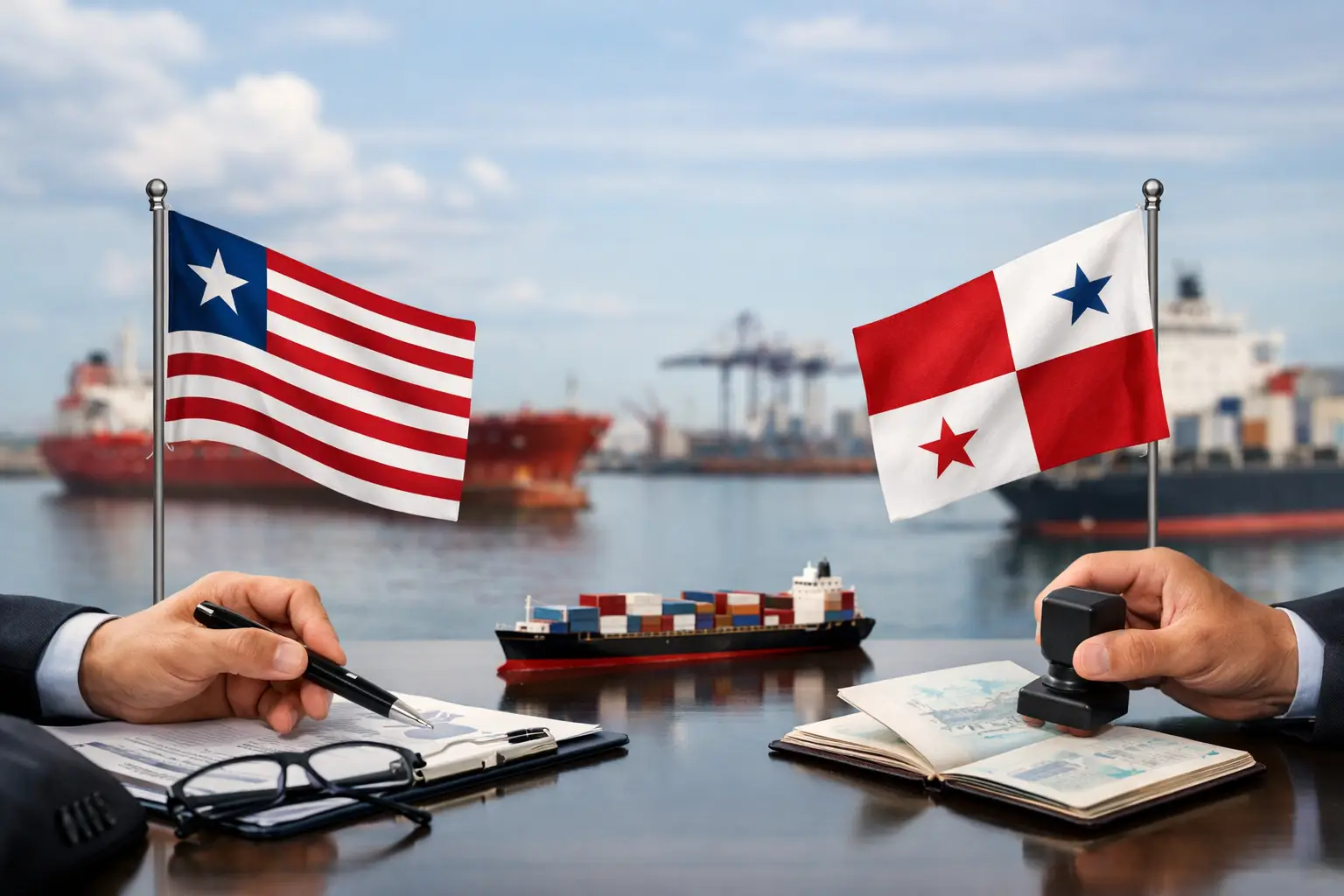
A job offer can move quickly, but a missing flag-state endorsement can delay your joining date. In the Liberia endorsement vs Panama endorsement decision, the right option is usually not a matter of personal preference. It depends first on the vessel’s flag, your current certificate of competency, your rank, and whether that certificate is accepted by the flag administration.
An endorsement is a formal document issued by a flag state to recognize a seafarer’s qualifying certificate. For officers, it commonly confirms that the flag administration recognizes a national Certificate of Competency, often called a CoC, for service in a specified capacity. It is a key compliance document, not simply an additional training certificate.
Both Liberia and Panama are major international ship registries. Their vessels operate across cargo, cruise, offshore, and yacht sectors, which is why crew frequently encounter both endorsement systems. The practical differences matter when you are preparing documents, responding to a crewing agency, or planning your next career move.
Liberia Endorsement vs Panama Endorsement: The Core Difference
The most important distinction is straightforward: a Liberian endorsement is intended for service on a Liberian-flagged vessel, while a Panamanian endorsement is intended for service on a Panama-flagged vessel. One does not automatically replace the other.
If you are joining a vessel registered in Liberia, the company will generally require documentation accepted by the Liberian Registry. If you are joining a Panama-flagged vessel, you will normally need the applicable Panama recognition or endorsement documentation. Even where the same underlying CoC and STCW certificates support both applications, each flag administration has its own verification process, application forms, recognition arrangements, and documentary requirements.
This is why seafarers should avoid applying based only on which endorsement appears faster or less expensive. A valid endorsement must match the vessel’s flag and your assigned position. Holding an endorsement for the wrong flag may not satisfy the operator’s compliance requirements.
Your Underlying Certificate Comes First
Neither flag-state endorsement creates an officer qualification from the beginning. The foundation is your valid national CoC, issued by the maritime administration that trained, examined, and certified you. The flag state then assesses whether it can recognize that certificate for the requested rank.
For example, a deck officer seeking an endorsement will usually need a valid CoC matching the capacity in which they will serve, such as officer in charge of a navigational watch, chief mate, or master. Engineers need equivalent certification for their engineering role. Ratings may have different documentation requirements depending on the job and vessel operation.
STCW compliance is central. The International Convention on Standards of Training, Certification and Watchkeeping for Seafarers sets the international framework, but flag administrations still apply their own procedures. A certificate that is valid in one national system is not automatically eligible for recognition by every flag.
Documents Commonly Required for Either Application
Exact requirements can change by rank, certificate country, vessel type, and flag-state rules. Your employer, crewing agent, or documentation provider should confirm the current checklist before submission. In most cases, be ready to provide:
- A valid national Certificate of Competency for the rank requested
- A valid passport and seaman book, where applicable
- STCW certificates required for the role, such as basic safety training and security awareness
- A current medical certificate and a compliant passport-style photograph
You may also need prior endorsements, name-change evidence, company letters, proof of sea service, or additional certificates for specialized duties. Tanker, passenger vessel, high-voltage, GMDSS, or security responsibilities can bring separate requirements.
Document quality matters more than many applicants expect. Expired certificates, cropped scans, inconsistent names, unreadable seals, and missing pages can all slow an application. If your passport uses a different spelling from your CoC or seaman book, address the discrepancy before the application is submitted. Do not assume an issuing authority will interpret two similar names as the same person without supporting evidence.
Processing and Verification: Where Delays Happen
Both Liberia and Panama may verify the authenticity of a CoC with the original issuing administration. This is an essential safeguard against fraudulent or invalid documents, and it is one reason that processing times cannot always be guaranteed.
A complete application can move efficiently when the issuing administration responds promptly and every document is current. Delays are more likely when a certificate cannot be verified, an administration has changed its verification channel, the requested rank does not match the CoC, or a document needs translation, correction, or replacement.
Some applications may begin with temporary or provisional documentation while final verification is completed, where permitted by the relevant administration and vessel operator. This can be helpful for urgent crew changes, but it should never be treated as a substitute for completing the full process. Always check the validity period, limitations, and whether the document is acceptable for your planned joining date and voyage.
For crew managers, this is a reason to start endorsement checks early in the mobilization process. For individual seafarers, it is a reason to keep a well-organized digital file of current certificates instead of searching for documents after a joining instruction arrives.
Which Endorsement Is Better for Your Career?
Neither endorsement is universally better. The better choice is the one that supports a confirmed position or the fleet segment you intend to work in.
A Panama endorsement may be relevant if you are applying to operators with Panama-flagged vessels. A Liberia endorsement may be the appropriate route for a Liberian-flagged fleet. If you work across fleets or expect to change vessels, you may eventually need more than one flag-state endorsement. That is common for experienced officers working internationally.
Your career plan should also account for the type of operation. Cruise, cargo, offshore, and yacht employers may have different internal requirements even when vessels share the same flag. A company may ask for documents well before embarkation because its compliance team needs time to review them. In some cases, an employer or crewing agency submits the application on your behalf. In others, the seafarer must supply documents directly or authorize a service provider to assist.
Do not confuse widespread use of a flag with automatic acceptance of every certificate. Recognition depends on the current arrangements between the flag administration and the country that issued your CoC. Confirming eligibility before paying application fees or making travel plans is the practical approach.
A Practical Way to Choose Between Liberia and Panama
Start with the vessel, not the endorsement. Ask the recruiter or vessel operator for the ship’s flag, your exact rank, and the endorsement required for that role. Then confirm that your underlying CoC is valid, current, and eligible for recognition under that flag.
Next, check timing. If your contract starts soon, ask whether a provisional document is available, what verification is still required, and who is responsible for submitting the application. Get the answer in writing where possible. This protects you from arriving at the port with incomplete documentation.
Finally, look beyond the immediate contract. If you are building an officer career in a particular fleet, maintaining the required flag-state endorsements can make you easier to deploy. Keep track of issue dates, expiry dates, and renewal conditions in the same way you monitor your CoC, medical certificate, passport, and mandatory STCW training.
Avoid These Common Endorsement Mistakes
The first mistake is applying for an endorsement before confirming the vessel’s flag. The second is submitting a CoC that expires during the expected processing period or contract. The third is assuming that a previous endorsement guarantees a new approval after your certificate, rank, or issuing administration has changed.
Another frequent problem is waiting until travel is booked to review documents. Endorsement requirements are part of joining readiness, alongside visas, medicals, training, and travel arrangements. Treat them as an early-stage requirement rather than a final administrative task.
Marine Pro Academy can assist seafarers who need clear guidance on maritime documentation and flag-state endorsement applications, subject to the eligibility rules and final approval of each issuing authority. Support can help make the submission process clearer, but only the relevant flag administration can issue or approve an endorsement.
Before accepting your next joining instruction, take ten minutes to compare your certificate details with the vessel’s flag and assigned rank. That small check can prevent a costly delay and help you join your vessel prepared, compliant, and confident.
Leave a Reply