
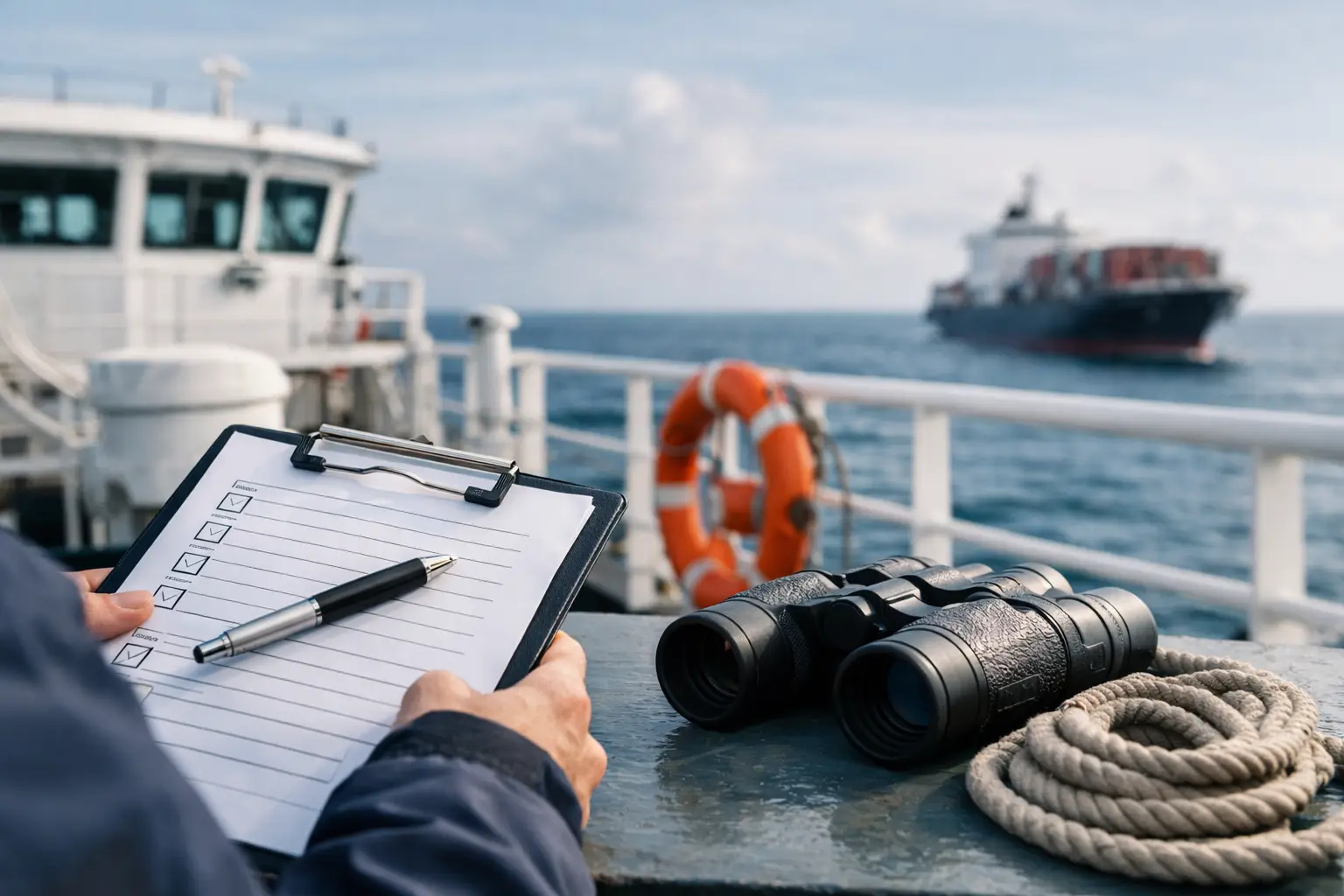
A missed endorsement, an expired medical certificate, or a name mismatch between documents can stop a seafarer at the final stage of joining a vessel. This guide to maritime documentation checklist is built for that practical reality: helping you prepare the records that employers, manning agencies, flag administrations, and port officials may require before sign-on.
There is no single document pack that applies to every crew member. Requirements depend on your rank, nationality, vessel type, trading area, flag state, company procedures, and contract. The goal is not to collect paperwork blindly. It is to maintain a controlled file that is current, verifiable, and ready to submit without last-minute corrections.
Start With a Maritime Documentation Checklist That Fits the Job
Before uploading or printing anything, confirm the exact joining requirements with the employer or manning agency. Ask for the vessel flag, position, vessel type, expected joining country, and any company-specific certificates. A deck officer joining a tanker, for example, will not carry the same compliance file as a steward joining a cruise vessel.
Then separate your records into three groups: documents that prove identity and travel eligibility, documents that prove medical fitness and sea service, and documents that prove competence for the assigned role. This simple structure makes gaps visible quickly.
Do not assume that a certificate accepted for a previous contract will be accepted for the next one. Flag-state endorsement rules, company policies, and vessel operations can change the requirement. Confirm before you spend time or money renewing the wrong credential.
Core Documents to Check Before Sign-On
Identity, travel, and employment records
Your passport should be valid for the period required by the destination country, company, and itinerary. Many employers expect more remaining validity than the minimum needed to board a flight. Check that your passport name, date of birth, nationality, and document number match the details shown on your seafarer’s identity document, certificates, visa applications, and employment records.
Keep your seaman’s book or discharge book current where it is required. It should accurately record prior service, vessel details, ranks, and sign-on and sign-off dates. Sea-service discrepancies can create problems when applying for upgrades, endorsements, or future positions.
Depending on the route and joining location, you may also need a valid visa, transit visa, work authorization, vaccination record, or country-specific entry document. These are travel documents, but they directly affect employment readiness. A valid STCW certificate does not solve a missing transit requirement.
Your employment pack may include a signed seafarer employment agreement, letter of assignment, joining instructions, travel itinerary, emergency contact form, and bank or payroll documents. Review every instruction carefully. If the vessel name, port, joining date, or job title is incorrect, request clarification before travel begins.
Medical fitness and health documentation
A valid seafarer medical certificate is one of the most time-sensitive documents in your file. Confirm the issuing authority is accepted for the vessel’s flag and company, and verify the expiry date against your planned contract and travel schedule. If a medical certificate expires during your assignment, ask the employer how that will be handled before you join.
Some roles, regions, and vessel operators may request additional medical evidence, drug and alcohol testing, vaccination documentation, or fitness assessments. Requirements are not identical across cruise, merchant, offshore, ferry, and yacht operations. Use the employer’s joining checklist as the final instruction.
Keep medical records private and submit only what the employer legitimately requires. Store scans securely, especially documents containing passport details, medical information, signatures, or financial data.
STCW certificates and flag-state evidence
Your training documents must match both your role and the vessel’s operation. For many seafarers, this includes basic safety training under STCW, security awareness or designated security duties, survival craft or rescue boat training, firefighting, medical training, and role-specific competency certificates.
Check each certificate for the correct name, certificate number, issuing authority, issue date, expiry date, and any required refresher date. If your legal name has changed, resolve the difference with supporting documentation well before joining. A small variation in spelling can delay verification.
For officers and ratings who require a Certificate of Competency, Certificate of Proficiency, endorsement, or flag-state recognition, verify that the document applies to the flag of the vessel you are joining. An underlying national certificate and a flag-state endorsement are not always interchangeable. Where an application is pending, do not rely on an assumption that a receipt will be accepted onboard. Get written confirmation from the employer or flag administration process owner.
If you are renewing training online, choose a provider whose course approval and delivery method meet the applicable requirements. Marine Pro Academy provides IMO-compliant, Liberia- and Panama-approved STCW training pathways designed to help seafarers complete required learning without losing valuable time between contracts. Approval status still needs to be matched to your employer’s specific requirement.
Vessel-specific and operational documents
Certain assignments require records beyond standard STCW training. Tanker personnel may need relevant tanker training. Offshore personnel may be asked for offshore survival, helicopter escape, or client-specific safety credentials. Cruise crew may need guest-service, crowd management, or company security documentation. Superyacht roles can involve separate flag, insurance, or itinerary expectations.
This is where generic checklists fail. Build a vessel-specific section for every contract and label it with the vessel name, position, flag, and joining date. Include any requested familiarization records, client approvals, permits, equipment qualifications, or company forms. If an item is “not applicable,” retain the written confirmation rather than leaving the question open.
How to Control Your Documents Without Losing Time
A strong documentation file has both physical and digital control. Carry original documents when required, but do not make originals your only source of information. Maintain clear color scans in a secure, organized digital folder that you can access while traveling.
Use a consistent file name format, such as: LastName_DocumentType_IssuingAuthority_ExpiryDate. For example, a medical certificate can be saved with its expiry date in year-month-day order, making it easy to sort and identify upcoming renewals.
Create a simple expiry tracker with the document name, issue date, expiry date, renewal lead time, issuing authority, and status. Renewal lead time matters because some medical appointments, endorsements, visas, and verification processes cannot be completed in a single day. Set reminders at 120, 90, 60, and 30 days before expiry, then add an earlier reminder for credentials that require travel or third-party processing.
Before submission, inspect every scan. It should be complete, readable, uncut, and free from glare. A blurred photo of a certificate can be rejected even when the underlying document is valid. Submit the front and back when information or endorsements appear on both sides.
A Final Pre-Travel Check
Complete a final review after you receive joining instructions, not just when you accept the job. Confirm that the documents in your bag and digital folder match the exact vessel, employer, flag, route, and role.
Check these practical points in one sitting: originals are packed safely; scanned copies are accessible without relying on one device; certificates remain valid through the required period; names and dates are consistent; and outstanding approvals have written status confirmation. Also keep one trusted contact ashore aware of where your essential records are stored in case documents are lost during transit.
Documentation is not an administrative afterthought. It is part of your readiness to work safely, travel legally, and protect the next contract. Keep the file current while you are employed, not only when a joining date appears. That habit gives you more control when the right assignment moves quickly.
Leave a Reply