
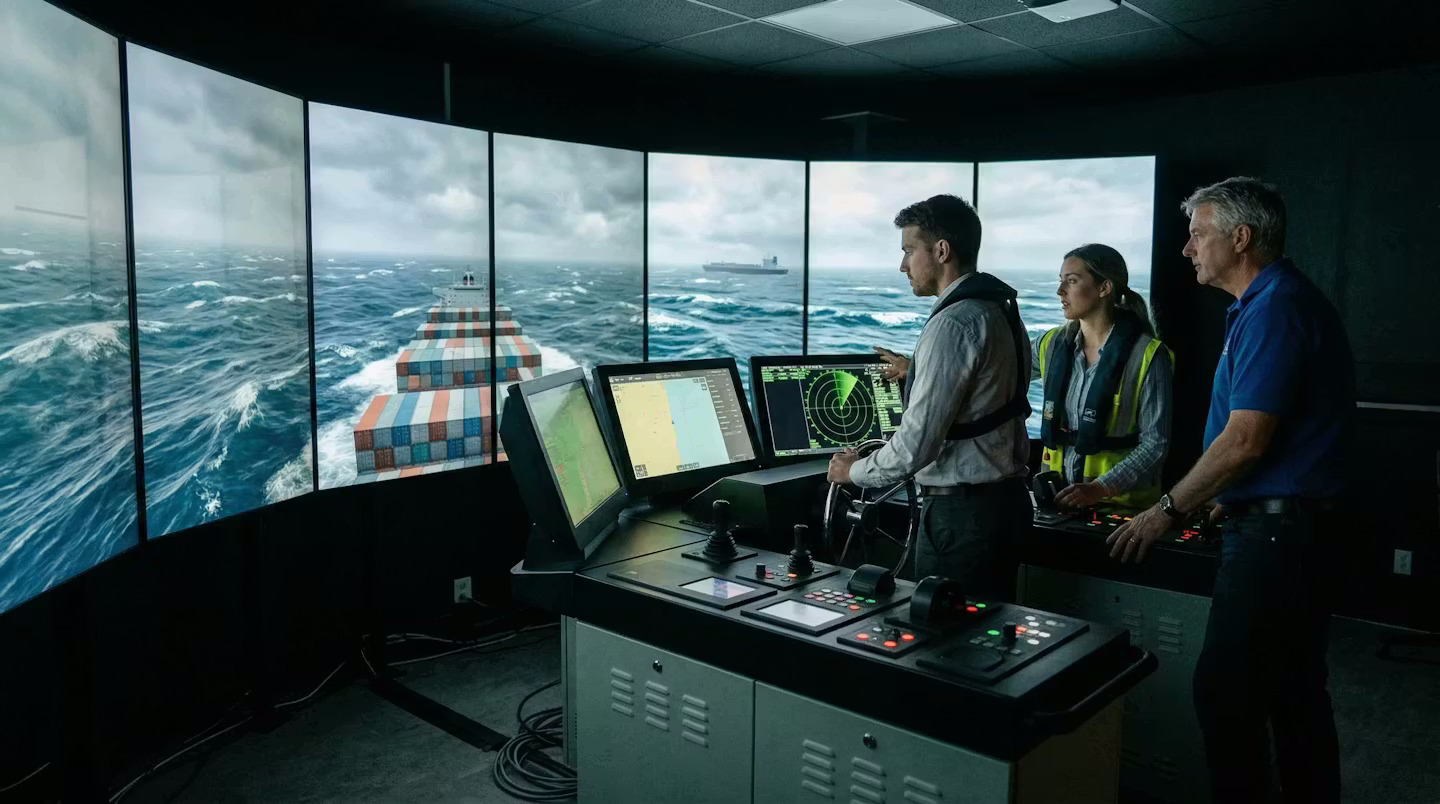
A crew member halfway through a contract does not need another travel problem. They need training that fits watch schedules, contract dates, and employer deadlines without forcing a trip to a shore-based center. That is where virtual simulation maritime training has changed maritime training from a logistical burden into a workable compliance tool.
For seafarers, the real value is not that online training feels modern. The value is that it helps keep certificates current, job applications moving, and mandatory learning accessible even when life is built around embarkation dates and vessel rotations. When the training is approved, standards-based, and designed around shipboard reality, virtual simulation becomes more than a convenience. It becomes a practical way to stay employable.
The real virtual simulation maritime training benefits

The main advantage of virtual simulation maritime training is simple. It gives seafarers a way to complete theory-based learning in a format that is closer to real onboard decision-making than static slides or text alone.
In maritime safety and security training, that matters. A seafarer does not just need to memorize terms from STCW tables. They need to recognize alarms, follow emergency sequences, identify hazards, and make the correct decision under pressure. Virtual simulation helps bridge that gap by placing the learner inside realistic scenarios where they must observe, choose, and respond.
For courses tied to STCW requirements, this can improve how learners absorb procedures in areas such as personal safety, security awareness, emergency response, and social responsibilities. Instead of reading only about a muster situation, a fire boundary, or an access control risk, the learner sees how the situation develops and what the correct response looks like.
That does not mean virtual simulation maritime training replaces every form of practical training. It does not. Some competencies still depend on in-person drills, equipment handling, or assessment requirements set by the relevant approval framework. But for theory delivery, familiarization, and decision-based learning, simulation adds useful operational context that standard e-learning alone often lacks.
Why seafarers value flexibility more than novelty
Most working crew are not shopping for training because they want a better digital experience. They are trying to solve a timing problem.
A vessel schedule changes. Internet access is inconsistent. Relief dates move. A recruiter asks for updated certificates before joining. Traditional classroom attendance can create delays that affect deployment and income. One of the strongest virtual simulation maritime training benefits is that it supports self-paced progress without tying the learner to one physical location.
That flexibility matters for both new entrants and experienced crew. A first-time applicant may need to complete mandatory theory quickly to qualify for jobs. An active seafarer may need to refresh expiring training while onboard or during leave. In both cases, the ability to study anytime is not a luxury. It is often the difference between meeting a deadline and missing an opportunity.
This is why approval status matters as much as convenience. Flexible training only has career value if it is accepted by employers, aligned with IMO standards, and issued through an approved framework. Otherwise, the learner saves time upfront only to face rejection later.
Better retention through scenario-based learning
Maritime training works best when learners can connect rules to actions. That is one reason virtual simulation tends to be more effective than passive content alone.
When a learner must move through a scenario, identify a hazard, or choose the next correct step, they are not just consuming information. They are rehearsing recognition and response. For courses covering subjects like PSSR, Elementary First Aid, Security Awareness, or Designated Security Duties, that interaction can improve retention because the material is tied to practical shipboard situations.
There is also a confidence factor. Many seafarers complete theory training under time pressure and then worry whether they have really understood the sequence of actions expected onboard. Simulation can reduce that uncertainty by showing how procedures unfold in context.
It is not perfect for every learner. Some people still prefer printed materials or instructor-led explanation for difficult topics. Others may need more repetition before they feel comfortable with the content. But in general, simulation helps translate compliance language into operational understanding, which is exactly where many online-only programs fall short.
Lower cost is important, but lower friction matters more
People often talk about cost savings first. That is fair. Online learning with virtual simulation can reduce travel expenses, lodging, local transportation, and time away from work. For many seafarers, especially those managing contracts across multiple countries, those savings are substantial.
But the bigger issue is often friction. A classroom course may require visas, port calls, leave coordination, and a training center date that does not align with crew change. Even when the course fee itself is manageable, the surrounding logistics can make the process expensive and slow.
Virtual simulation reduces those barriers. A learner can start immediately, progress in smaller time blocks, and complete required theory without reorganizing their entire schedule around a physical class. That is especially useful for multinational crew who may not have easy access to approved centers in the country where they are currently located.
For employers and manning agencies, the benefit is also operational. Faster access to compliant training helps reduce delays in crew readiness and supports a more predictable documentation pipeline.
Access supports compliance
A training requirement only works if people can realistically complete it. In maritime, access has always been a challenge because the workforce is mobile, international, and time-constrained.
That is why virtual simulation maritime training benefits go beyond convenience and into compliance itself. When approved courses are available online, more seafarers can complete mandatory theory on time. That helps reduce lapses in eligibility and supports safer onboarding because crew can arrive with current knowledge already in place.
This is particularly relevant for global maritime labor markets. A seafarer in one region may be applying to a cruise line, cargo operator, ferry company, offshore employer, or yacht program based somewhere else entirely. Training access cannot depend on being near a specific classroom center at the right time. Digital delivery solves that problem when it is paired with legitimate approval and recognized certification pathways.
Marine Pro Academy is built around that reality, offering approved online STCW and maritime security training designed for seafarers who need speed, access, and internationally recognized compliance support.
Where virtual simulation maritime training fits best
Virtual simulation is especially strong in courses where situational awareness, process recognition, and procedural decision-making are central to the learning outcome. Safety familiarization, security awareness, social responsibility, and emergency theory all benefit from seeing a realistic sequence rather than only reading course text.
It is also useful for learners who have shipboard experience but need to refresh formal knowledge before re-entering the hiring market. An experienced crew member may already know what a muster station, restricted area, or onboard hazard looks like. Simulation helps reconnect that experience to the approved theory framework needed for certification.
The trade-off is that not every competency can be fully taught through a screen. Hands-on tasks, physical drills, and equipment use still matter in parts of maritime training. A serious training provider should be clear about that. The strongest programs use virtual simulation where it genuinely improves learning, not as a marketing label attached to basic online content.
What seafarers should look for before enrolling
Not all online training carries the same value. Before choosing a provider, seafarers should check whether the course is approved, whether it aligns with the relevant STCW function or code section, and whether the certificate is positioned for international acceptance by shipping companies and cruise lines.
The learning format also matters. A course that includes virtual simulation should do more than play videos. It should guide the learner through decisions, environments, and scenarios that reflect real shipboard conditions. Good design is not about entertainment. It is about making the training clearer, faster to apply, and easier to retain.
Support matters too. Seafarers often need more than one certificate. They may need bundled training, document services, or follow-up courses tied to security or crowd management requirements. Working with one provider that understands both training and career-readiness paperwork can save time and reduce mistakes.
For most crew, the question is no longer whether online simulation-based learning has a place in maritime training. The question is whether the provider delivers it in a way that is approved, practical, and useful for real employment.
The best training is the kind you can actually complete, actually use, and actually present with confidence when your next contract depends on it.
Leave a Reply