
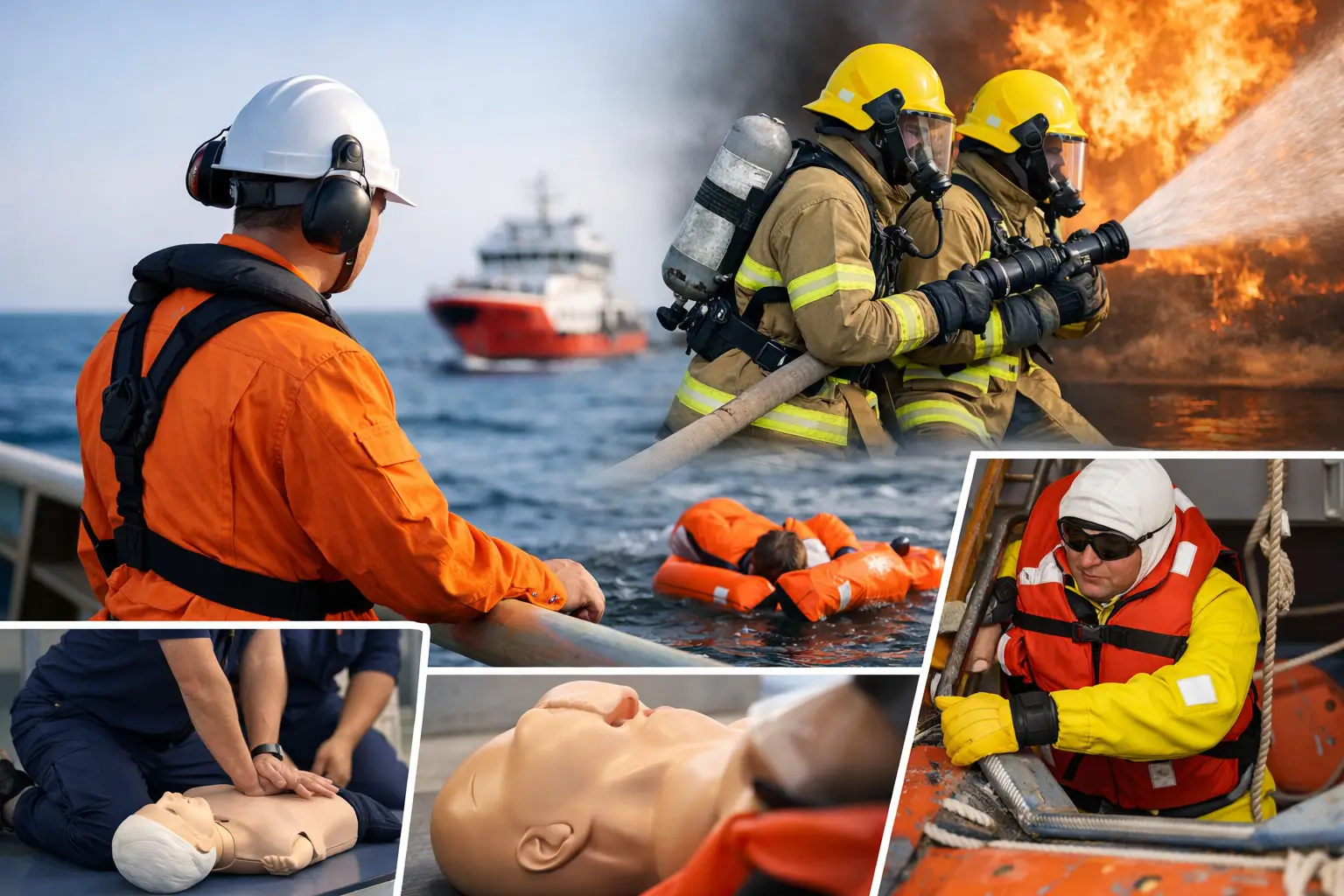
If you are trying to get onboard fast, choosing the top STCW safety modules to take is not just a training decision. It affects how quickly you meet hiring requirements, how confidently you perform in emergencies, and whether your certificates match the vessel, flag, and role you are targeting.
For most seafarers, the right starting point is not a single course but a sequence. Some modules are mandatory under STCW Basic Training. Others become high-value additions because employers expect them, especially in cruise, offshore, passenger, and security-sensitive operations. The best choice depends on whether you are new to sea service, returning after a gap, or moving into a more specialized position.
How to judge the top STCW safety modules to take
The simplest way to prioritize STCW training is to look at three things: regulatory necessity, hiring relevance, and onboard usefulness. A module may be required by the STCW Code, but some courses also carry practical weight because they prepare you for real shipboard conditions, not just certificate compliance.
A new entrant usually needs the core A-VI/1 elements first. A seafarer joining a passenger vessel may need additional crowd and crisis training. Someone assigned security-related duties will need a different path. That is why the smartest training plan is the one that matches both the regulation and the contract you want next.
1. Personal Survival Techniques (PST)
PST, aligned with STCW Code A-VI/1-1, belongs at the top of almost every list. It is one of the most essential safety modules because it prepares seafarers to respond when abandoning ship becomes necessary. That includes liferaft procedures, survival principles, use of life-saving appliances, and immediate actions in the water.
This module matters because survival training is not theoretical onboard. In a real emergency, hesitation costs time, and time affects outcomes. Even crew in hotel, galley, or entry-level support roles need to understand basic abandonment and survival procedures.
If you are just entering the industry, PST is not optional. If you are renewing or returning to sea, refresher requirements may also apply depending on your certificate status and company policy. For employability and operational readiness, it stays near the top.
2. Fire Prevention and Fire Fighting (FPFF)
FPFF under A-VI/1-2 is another core module that no seafarer should postpone. Fire remains one of the highest-risk onboard emergencies across vessel types, and this training gives crew the knowledge to prevent ignition, identify hazards, use firefighting equipment, and respond as part of an organized team.
The reason FPFF ranks so highly is simple. Fire incidents escalate quickly in enclosed marine environments. A crew member who understands fire classes, extinguishing methods, breathing apparatus, and boundary cooling is far more useful than someone who only knows alarm signals.
This is also one of the most respected modules from an employer perspective because it signals practical readiness. Whether you are heading to a cargo vessel, ferry, offshore support vessel, or cruise ship, fire response capability is central to safe operations.
3. Elementary First Aid (EFA)
Elementary First Aid, listed as A-VI/1-3, is one of the most immediately practical STCW safety modules to take. It focuses on basic casualty assessment, bleeding control, shock management, burns, fractures, and first response until more advanced medical support is available.
At sea, medical response times are not the same as ashore. Even on well-equipped vessels, first actions by nearby crew can make a major difference. That is why EFA has value far beyond compliance. It builds confidence during common onboard incidents, from slips and galley burns to lifting injuries and emergency trauma.
For entry-level crew, EFA strengthens your Basic Training package. For experienced seafarers, it remains a skill set that supports daily operational safety, not just emergency response.
4. Personal Safety and Social Responsibilities (PSSR)
PSSR under A-VI/1-4 is sometimes underestimated because it does not look as dramatic as survival or firefighting. That is a mistake. This module covers safe working practices, emergency procedures, pollution awareness, fatigue, communication, and the responsibilities of living and working effectively onboard.
In real shipboard life, many incidents do not start as major emergencies. They start with poor situational awareness, weak communication, unsafe routine behavior, or failure to follow procedures. PSSR helps reduce those failures.
It also matters for first-time seafarers because it introduces the professional standards expected onboard. If you are moving from shore-based work into maritime employment, this module helps bridge that operational gap quickly.
5. Security Awareness Training
Security Awareness training under A-VI/6-1 is not always grouped mentally with “safety” by new seafarers, but onboard the two are closely connected. Vessel security incidents can become safety incidents very quickly, especially when they involve unauthorized access, suspicious items, stowaways, or threat escalation in restricted areas.
This module is a strong addition for most crew because many employers now expect baseline security competence even for personnel without designated security duties. It is especially relevant for cruise ship crew, port-call intensive operations, and vessels operating through higher-risk regions.
If you want a practical route to broader employability, this course often delivers more value than people expect. It is short, recognized, and directly relevant to modern vessel operations.
6. Designated Security Duties (DSD)
If your role includes security-related tasks, DSD under A-VI/6-2 moves from useful to necessary. This module goes beyond awareness and prepares crew to carry out assigned security functions under the ship security plan. That can include monitoring restricted areas, screening, handling security equipment, and supporting incident procedures.
The reason DSD ranks among the top modules is that many seafarers lose time by taking only basic awareness training when their contract actually requires designated duties competence. If you are targeting cruise, passenger, offshore, or large commercial vessel positions, checking this requirement early can prevent delays in joining.
There is a trade-off, though. Not every seafarer needs DSD immediately. If your first objective is entry into general vessel work, Basic Training may come first. But if your hiring channel regularly requests security-task readiness, DSD should move up your list.
7. Crowd Management and Crisis-related training
For seafarers planning to work on passenger vessels, crowd management and crisis-related modules can be among the smartest courses to add early. These courses are especially relevant where crew interact with passengers during embarkation, evacuation, or emergency control situations.
Passenger vessel operations create a different pressure profile from cargo operations. The challenge is not only responding to the emergency itself but directing large numbers of people who may be unfamiliar with marine procedures, frightened, or unable to move quickly. Training in crowd control, communication, and crisis behavior makes a real difference.
This is where career planning matters. If your target is cruise employment, these modules may be more valuable than a generic add-on course with less direct hiring impact. If you are not going into passenger service, they may be better taken later.
The best order to take them
For most entry-level seafarers, the strongest first step is the full Basic Training path: PST, FPFF, EFA, and PSSR. That gives you the core A-VI/1 foundation required across a wide range of vessel roles and keeps your application aligned with standard hiring expectations.
After that, security modules usually offer the fastest practical upgrade. Security Awareness is a sensible next step for broad relevance. DSD should follow if your intended role includes assigned security tasks. Passenger vessel crew should then look closely at crowd management and crisis-related training because those courses align directly with operational duties onboard.
If speed matters, bundled training can make more sense than enrolling course by course. A structured bundle reduces administrative friction, helps keep certificates aligned, and shortens the path to readiness. That is especially useful when you are between contracts or trying to meet joining deadlines with limited travel time.
What seafarers often get wrong
The biggest mistake is choosing modules based only on price or availability, without checking whether the course matches the vessel type and position. A cheaper course path is not efficient if it leaves a compliance gap that delays deployment.
The second mistake is treating all modules as equal in timing. They are not. Core STCW Basic Training should usually come first. Security and passenger-related modules should then be selected based on the actual work scope. That sequence saves both time and money.
The third mistake is ignoring delivery format and approval status. For online learning, what matters is whether the training is properly structured, compliant, and accepted for the intended purpose. Marine Pro Academy focuses on IMO-compliant, flag-approved pathways that help seafarers study from anywhere while staying aligned with real employment requirements.
Choosing the right training path for your next contract
If you are completely new to the industry, start with Basic Training and build from there. If you already hold core certificates, look at the modules that remove the next barrier to employment – usually security duties or passenger vessel requirements. If you are changing sectors, such as moving from cargo to cruise, your training plan should change with it.
The strongest course strategy is not the one with the most certificates. It is the one that gets you compliant, employable, and operationally prepared without wasting time. Choose the modules that match the job you are actually pursuing, and your training starts working like a career tool instead of a paperwork exercise.
The right STCW modules do more than help you meet requirements. They put you in a better position to join on time, perform with confidence, and step onboard ready for the realities of the vessel, not just the checklist.
Leave a Reply