
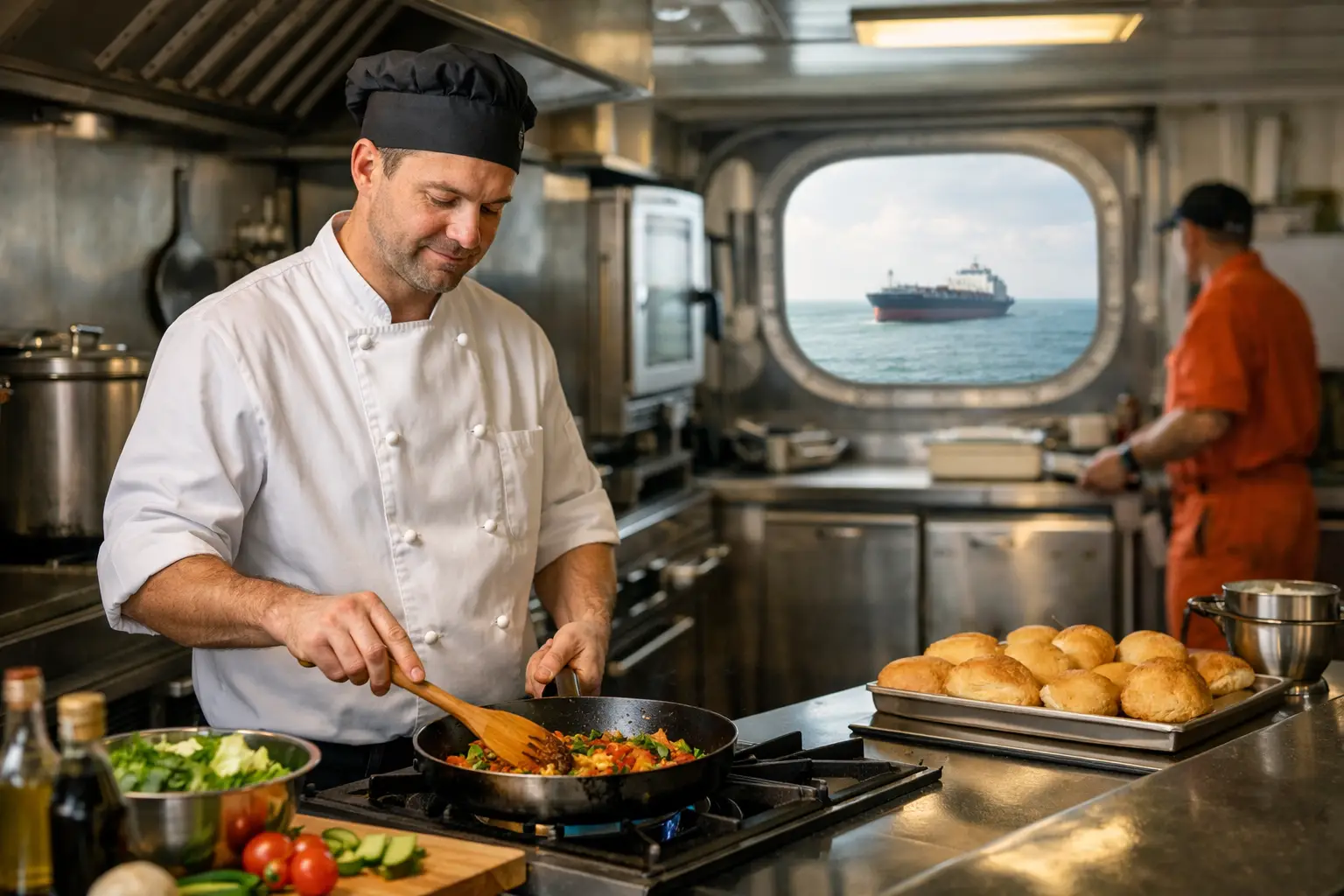
A vessel can carry advanced navigation systems, certified officers, and a full safety management system, but poor food handling in the galley can still create serious operational risk. That is why the ship’s cook online course according to MLC 2006 Regulation 3.2 matters. It is not just about preparing meals. It is about hygiene, nutrition, safe galley operations, and proving that the person responsible for food service onboard is trained for the realities of shipboard life.
What MLC 2006 Regulation 3.2 means for ship’s cooks
MLC 2006 Regulation 3.2 addresses food and catering standards for seafarers working onboard ships. In practical terms, it requires that seafarers have access to food and drinking water of appropriate quality, nutritional value, and quantity. It also requires that the organization and equipment of the catering department support proper meal preparation and hygienic service.
One key point is the qualification of the person preparing food. Where a ship carries a cook, that person should be trained and qualified for the position. This is where a ship’s cook online course under MLC 2006 Regulation 3.2 becomes relevant. The course should help meet the knowledge expectations tied to safe food preparation, galley sanitation, personal hygiene, stock control, and nutrition for multicultural crews working long contracts.
The regulation is straightforward in intent, but application can vary depending on vessel type, flag requirements, company policy, and manning structure. Some operators require a dedicated certified ship’s cook. Others may combine catering duties with other onboard responsibilities on smaller vessels where permitted. That is why seafarers should always check both flag-state and company-specific requirements before enrolling.
What a ship’s cook online course according to MLC 2006 Regulation 3.2 should cover
A compliant course is not simply a cooking class moved onto a screen. It should be structured around shipboard catering competence. That means the training needs to reflect the operational environment of merchant ships, offshore vessels, ferries, cruise support roles, and other commercial settings where food service affects crew welfare and health.
Food safety and hygiene
This is the foundation. A ship’s cook must understand contamination risks, temperature control, safe storage, thawing procedures, cleaning routines, pest prevention, and cross-contamination controls. In a vessel galley, limited space and high workload make these controls even more important than in many shore-based kitchens.
Nutrition for seafarers
Crew members work different shifts, come from different cultural backgrounds, and often remain onboard for long periods. Nutrition planning matters. A good course should address balanced menu planning, special dietary needs, hydration, and food variety that supports crew health and morale.
Galley operations onboard
Shipboard catering is operational work. The cook needs to understand waste management, stock rotation, receiving provisions, inventory control, freezer and chiller organization, and meal service under vessel movement. These are practical issues that directly affect safety and efficiency.
Personal hygiene and sanitation controls
The course should reinforce standards for hand hygiene, illness reporting, protective clothing, cleaning schedules, and sanitizing procedures. This is especially important because foodborne illness onboard can affect multiple crew members quickly and disrupt vessel operations.
Basic management of the catering function
On many vessels, the ship’s cook is also expected to plan menus, estimate quantities, monitor stores, and reduce waste. A strong course should include basic catering administration, not just food preparation theory.
Can a ship’s cook course be completed online?
Yes, in many cases the theory component can be completed online, and this is one of the most practical options for working seafarers. For crew members joining from different countries, changing contracts quickly, or spending limited time ashore, online access removes a major barrier. It allows training to start immediately and continue from home, hotel, airport transit, or onboard if connectivity allows.
That said, the right answer depends on the course design and the acceptance standard being applied. Some programs are fully online for theory-based knowledge outcomes. Others may include assessments, documentation review, or practical elements depending on the administration or employer expectation. Online training is effective when it is built specifically for maritime use and aligned with recognized compliance requirements, not when it is a generic hospitality course presented as maritime training.
For that reason, seafarers should look closely at course scope, approval status where applicable, and whether the learning outcomes clearly reference shipboard food handling, galley hygiene, and crew catering responsibilities.
Who needs this training
The obvious candidate is the designated ship’s cook. But the need can extend beyond that title. On some vessels, especially smaller operations, a crew member may be assigned food preparation duties without holding a traditional catering background. In those cases, structured training becomes even more important.
A ship’s cook online course according to MLC 2006 Regulation 3.2 may be relevant for crew members preparing to join galley departments, experienced cooks moving from shore catering into maritime work, and employers seeking to document that onboard food service personnel have appropriate training. It can also support career progression for utility crew or galley stewards who want to move into a recognized cook role.
The main question is not just job title. It is responsibility. If a person is expected to prepare meals for crew onboard, training should match that responsibility.
What to check before enrolling
Speed matters, but compliance matters more. Before starting any ship’s cook online course, verify that the course is intended for maritime catering and not generic food service. The wording of the syllabus should make this clear.
Check whether the course content addresses MLC 2006 Regulation 3.2 directly or is clearly mapped to shipboard catering standards. Review the assessment process as well. Employers and manning agencies often want evidence that the learner completed a structured program and passed a measurable evaluation.
It is also worth checking how the certificate is issued, what learner identity controls are used, and whether the provider understands the documentation pressures seafarers face between contracts. A course that is accessible but poorly documented can still create delays during hiring.
Marine Pro Academy’s training model reflects what seafarers usually need most – compliant course structure, immediate access, and the ability to study from anywhere without unnecessary delay.
The trade-off between convenience and acceptance
Online maritime training has clear advantages. It reduces travel, saves time between contracts, and gives seafarers more control over when they study. For galley personnel who may already be working long hours or joining on short notice, that flexibility is valuable.
Still, convenience alone is not enough. Acceptance always depends on the vessel operator, flag requirements, and how well the course aligns with the intended role. A fast course with vague maritime relevance may be less useful than a more structured program that clearly supports compliance. That is the trade-off.
The best approach is practical. Match the training to your next employment need. If your company or manning agent requires a specific standard, follow that standard exactly. If you are building your qualifications for future opportunities, choose training that is maritime-specific, professionally structured, and easy to present during recruitment.
Why this training supports employability
Galley roles are often underestimated until there is a problem onboard. Food quality affects morale. Food safety affects health. Poor catering standards can create complaints, non-conformities, and avoidable operational issues. Employers know this, which is why trained catering personnel are valued.
For seafarers, the right course does more than check a box. It shows readiness for life at sea. It demonstrates that you understand hygiene controls, food handling discipline, and the realities of serving a working crew in confined conditions. That matters whether you are applying to a cargo vessel, offshore unit, passenger operation, or support vessel.
Online training also helps reduce downtime. Instead of waiting for a classroom schedule or traveling to a training center, seafarers can begin immediately, complete the theory efficiently, and keep their documents moving. In a market where joining windows can be short, that speed can make a real difference.
Choosing the right ship’s cook online course under MLC 2006 Regulation 3.2
A useful course should be clear, maritime-focused, and built around operational compliance. It should explain not only what to do in the galley, but why those procedures matter onboard. That includes hygiene discipline, nutrition planning, safe storage, waste control, and the daily realities of catering for crew at sea.
If you are comparing options, look past the marketing language. Focus on content, delivery, assessment, and whether the course reflects the actual responsibilities of a ship’s cook. The stronger the alignment between training and onboard duties, the more valuable the certificate will be when it is time to join your next vessel.
For seafarers working toward galley assignments, the right training is not extra paperwork. It is part of being ready to serve safely, work professionally, and step onboard with confidence.
Leave a Reply