
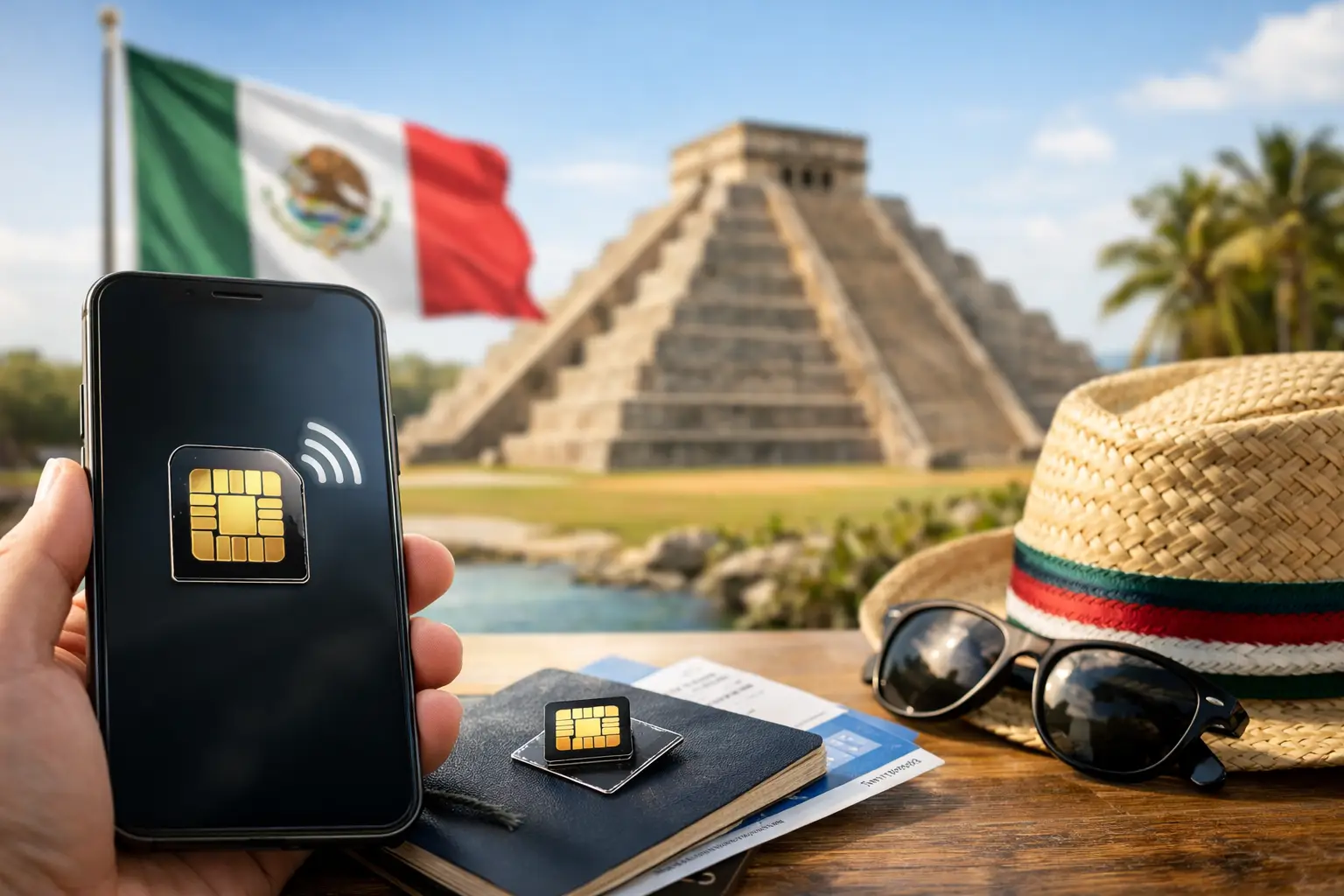
A missed update from crewing, a delayed airport transfer message, or no access to your training portal during transit can create avoidable problems fast. A mexico esim data plan – 5gb | 30 days is built for exactly that gap – when you are moving between airport, hotel, port, and vessel and need reliable mobile data without hunting for a local SIM.
For seafarers, connectivity is not just personal convenience. It supports contract logistics, document access, crew communication, and course continuity. If you are joining a vessel in Mexico, transiting through a Mexican port, or staying ashore between assignments, a 5GB eSIM valid for 30 days is often the right middle ground between cost control and practical use.
Who the Mexico eSIM data plan 5GB 30 days fits best
This plan suits working crew who need predictable mobile data for a limited period. That includes seafarers on joining flights, yacht crew preparing for embarkation, offshore personnel in transit, cadets handling training tasks, and cruise or merchant crew during short stays ashore.
The key advantage is duration matched to operational reality. Thirty days usually covers the full travel window around sign-on, repatriation, hotel stay, medical visits, documentation follow-up, and pre-boarding coordination. You are not paying for a long-term local contract, and you are not relying on unstable public Wi-Fi when timing matters.
A 5GB allowance is also more practical than it may sound. For routine use such as messaging, email, navigation, document downloads, crew management apps, and occasional video calls, it can last well through a month. If your usage is heavy, it may not be enough. But for disciplined operational use, it is often the right size.
Why eSIM works well for crew travel
Traditional SIM purchase can be inefficient when you are moving on a joining schedule. You may land late, transit quickly, or head straight to the port. Finding a local shop, presenting ID, dealing with language barriers, and swapping physical SIMs is not always realistic.
An eSIM removes that friction. You install the plan digitally on a compatible device, activate it when needed, and keep your main SIM in place if your phone supports dual SIM functionality. That matters for seafarers who need to keep their primary WhatsApp number active while using local data in Mexico.
There is also a security benefit. Public Wi-Fi in airports, transport hubs, and hotels is useful but not ideal for sending passport copies, contract details, course confirmations, or travel documents. Mobile data is generally the safer option for routine operational communication.
What 5GB actually covers in real use
For most maritime professionals, 5GB should be viewed as a working-data package, not an entertainment package. If you use it for voyage-critical and career-related tasks, it stretches much further.
A typical seafarer can use 5GB over 30 days for messaging apps, email traffic, map navigation, electronic document access, online check-ins, moderate web browsing, and some learning platform access. If you are streaming high-definition video, running frequent hotspot sessions, or spending hours on social media video feeds, usage will rise quickly.
This is where discipline matters. Download training materials over trusted Wi-Fi when possible. Keep app updates restricted to Wi-Fi. Disable background data for nonessential apps. Use video calls only when necessary. Those basic controls can make a major difference over a 30-day period.
Mexico eSIM data plan 5GB 30 days for training access
For crew in transit, connectivity often overlaps with certification and compliance tasks. Many seafarers use travel time to complete course modules, upload documents, respond to training coordinators, or check enrollment status. A Mexico eSIM data plan 5GB 30 days can support that workflow if used carefully.
Text-based learning modules, portal logins, PDF downloads, and email communication typically do not consume large amounts of data. Live virtual sessions, repeated video playback, and large certificate file transfers use more. So the plan works best when your training activity is light to moderate rather than video-heavy.
That balance is especially useful for seafarers trying to stay productive between contracts. If you need to review safety material, confirm course schedules, or manage certification tasks while moving through Mexico, a 30-day eSIM provides continuity without forcing you into a local telecom contract.
What to check before buying
Before purchasing any eSIM plan, confirm your device is eSIM-compatible and carrier-unlocked. This is the first operational check, and it saves time later. A locked device may accept the installation process but fail to connect properly.
You should also verify how activation works. Some plans start the validity period immediately after installation, while others begin only when the eSIM connects to a supported network in the destination country. For crew with precise travel dates, that difference matters.
Network quality is another variable. Coverage in major cities, airports, and commercial port areas is usually stronger than in remote coastal zones or offshore transfer points. If your route includes isolated areas, do not assume equal signal performance everywhere. An eSIM is a strong travel solution, but local network conditions still apply.
Finally, understand whether the plan is data-only. Many eSIM products do not include a local voice number or SMS service. For most seafarers, this is acceptable because communication runs through WhatsApp, email, crew apps, and web-based platforms. Still, it is better to know that upfront.
How to use 5GB efficiently during port calls and transit
The best approach is to treat mobile data as an operational resource. Use it first for crewing messages, flight updates, transport coordination, maps, document retrieval, banking checks, and urgent family contact. Those uses are low-volume but high-value.
Entertainment should come second. If you have hotel or terminal Wi-Fi for larger downloads, use that for media, app updates, and cloud backups. Turn off automatic photo syncing and background refresh on apps you do not need. If you tether a laptop, monitor that usage closely because laptops consume data faster than phones for standard browsing and software activity.
This is not about limiting connectivity. It is about keeping the plan available when you actually need it – during flight disruption, check-in issues, last-minute crew instructions, or a request to resend documents before boarding.
Where this plan makes the most sense
A 5GB, 30-day Mexico eSIM is strongest for short-term, purpose-driven travel. If you are arriving for vessel joining, attending a training event, handling embassy or documentation tasks, or staying in-country for several weeks before deployment, it is a practical fit.
If you are living ashore in Mexico for an extended period and using mobile data as your primary internet source, a higher-capacity option may be better. The same applies if you expect daily hotspot use or frequent video streaming. The trade-off is simple: 5GB offers efficiency and lower spend, but it rewards controlled usage.
For many crew, that trade-off is acceptable. You need dependable access, fast setup, and no unnecessary steps. That is exactly where eSIM performs well.
Fast setup matters when time is tight
Crew travel rarely runs on generous timelines. Sign-on changes, flight reroutes, hotel transfers, and port reporting windows can shift with little notice. A digital data plan reduces one more point of delay.
That is why eSIM adoption continues to grow among internationally mobile professionals, including seafarers. It supports immediate readiness. You can arrive connected, receive instructions without delay, access your records, and stay in contact while moving between shore-side checkpoints.
For professionals managing both career progression and travel logistics, that matters as much as price. Marine Pro Academy supports that same practical need across training and connectivity – helping seafarers stay ready, connected, and operational wherever the next assignment begins.
Choose the plan based on how you actually work, not just the headline data amount. If your priority is reliable communication, document access, and controlled data use over a 30-day Mexico stay, 5GB is often enough to keep your journey on track.
Leave a Reply