
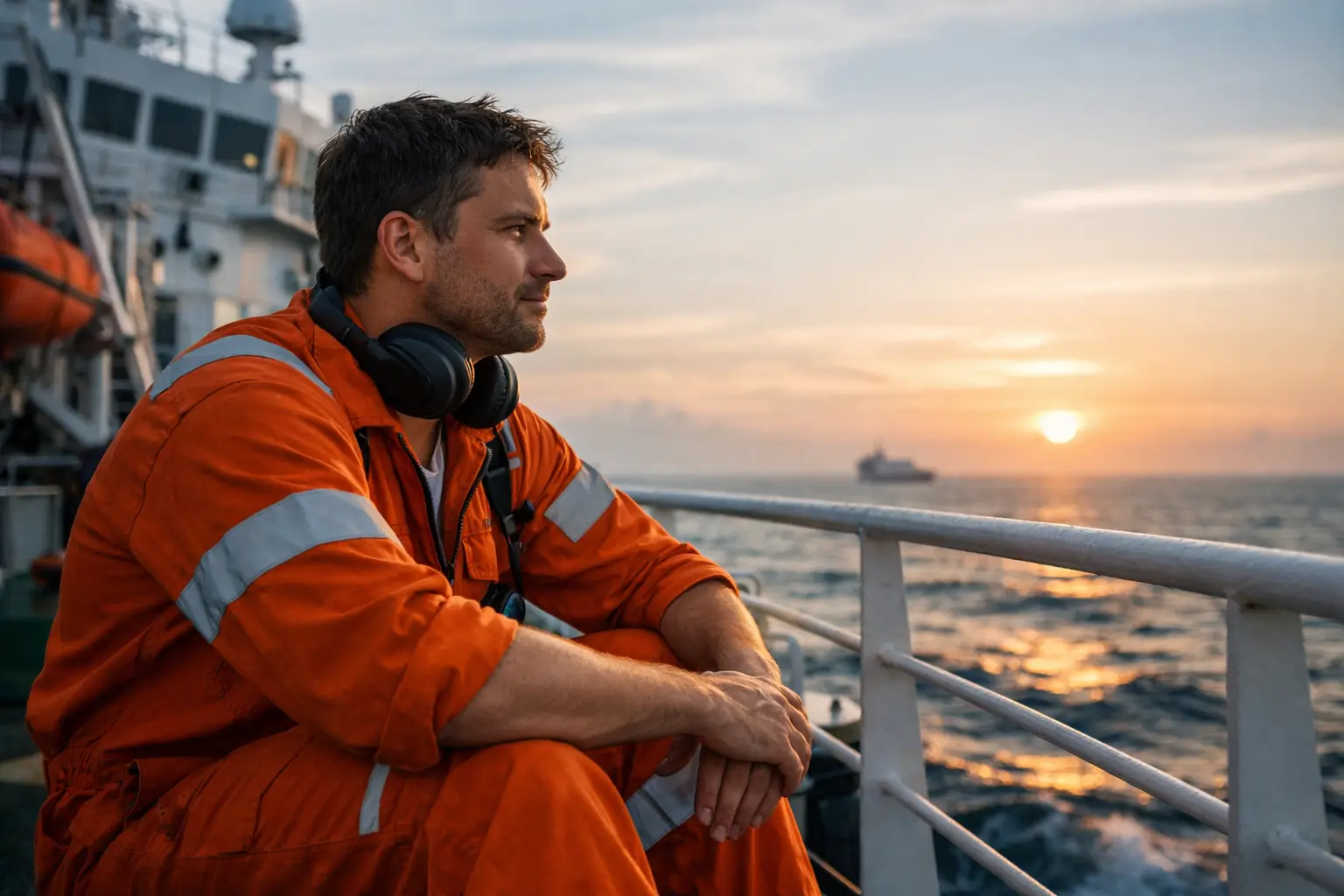
A crew change delay, a broken sleep schedule, and another contract extension can shift a normal day onboard into a heavy one fast. That is why mental health awareness matters at sea. For seafarers, it is not a soft topic or a shore-side talking point. It affects watchkeeping, communication, safety decisions, fitness for duty, and long-term career stability.
The maritime industry is built on discipline, compliance, and operational readiness. Mental fitness belongs in that same category. A crew member who is overwhelmed, isolated, or running on chronic fatigue may still show up for duty, but the risk does not stay personal for long. Onboard, one person’s mental strain can affect team coordination, situational awareness, and the margin for error.
Why mental health awareness matters onboard
Life at sea combines pressures that are hard to explain to people outside the industry. Long periods away from family, changing time zones, noise, motion, irregular rest, contract uncertainty, multicultural crews, and limited privacy all add up. Even experienced seafarers can struggle when several of those factors hit at once.
Mental health awareness is the ability to recognize when stress has moved beyond the normal demands of the job. It also means understanding that poor concentration, irritability, withdrawal, sleep disruption, and low motivation are not always attitude problems. Sometimes they are early signs that someone is carrying too much for too long.
This matters for safety as much as wellbeing. Maritime operations depend on clear judgment, steady communication, and reliable routines. When a crew member is mentally overloaded, small tasks can take longer, instructions can be missed, and conflict can build where it would normally be managed quickly.
The pressure points seafarers face
Some stress is built into the profession. Tight port schedules, inspections, audits, drills, weather exposure, and commercial pressure are part of the job. The issue is not stress by itself. The issue is accumulation without enough recovery.
Fatigue is one of the biggest pressure multipliers. A seafarer who is short on sleep often feels mentally sharper than they really are. Reaction time slows, patience drops, and memory gets less reliable. Add isolation or concerns from home, and even routine duties can start to feel unusually hard.
Connectivity also plays a bigger role than many operators used to admit. Staying in touch with family can reduce isolation, but poor or inconsistent access can make stress worse. There is a trade-off, though. Constant bad news from home, especially when a seafarer cannot act on it, can increase emotional strain. Awareness is not just about staying connected. It is about knowing how communication affects your state of mind and setting boundaries when needed.
Contract timing is another factor. Many seafarers work under real administrative pressure between assignments. If certificates, documents, or training deadlines start slipping, stress rises quickly because readiness affects income. That kind of pressure can follow a person onboard and make recovery harder.
What mental strain looks like in real operations
Not every seafarer talks openly about stress, anxiety, or low mood. In practice, the signs are often operational before they are verbal.
A crew member who is normally sharp may become forgetful during handover. Someone who usually works well with others may start snapping at colleagues or avoiding conversation. Another may lose appetite, struggle to sleep off watch, or stop engaging in routines they usually keep. Sometimes the sign is overcompensation – working nonstop, refusing rest, or insisting everything is fine while performance slowly drops.
These shifts do not always mean a clinical condition. It depends on duration, severity, and context. But they should not be ignored just because the person is still functioning. Onboard culture often rewards endurance, and endurance matters. Still, there is a difference between professionalism and silent deterioration.
Mental health awareness and maritime culture
One barrier is the belief that strong seafarers should simply push through. Resilience is essential at sea, but resilience is not the same as denial. A professional response to mental strain is to identify it early, manage it properly, and reduce the chance that it affects safety or employability.
Another barrier is privacy. Many crew members worry that speaking up could affect future contracts or how they are viewed by supervisors. That concern is understandable. The answer is not forcing personal disclosure. The better approach is building a culture where asking for support, rest, clarification, or a practical adjustment is treated as responsible, not weak.
For officers and senior crew, this is partly a leadership issue. Tone onboard matters. A vessel can have formal policies in place, but if the day-to-day environment punishes honesty, people will stay quiet until performance problems become visible.
Practical steps seafarers can use
Mental health awareness only helps if it leads to action. Onboard, the most effective actions are usually simple, repeatable, and realistic within shipboard constraints.
Start with self-checks that are specific. Instead of asking whether you feel stressed, ask whether your sleep has changed, whether your focus is dropping, whether you are avoiding people, or whether small problems are causing outsized reactions. These are easier to spot than broad labels.
Protect sleep where you can. Seafarers do not control every watch pattern or operational demand, but they can reduce extra sleep disruption. That may mean limiting caffeine late in the cycle, using off-duty time for actual recovery instead of nonstop scrolling, and treating sleep as part of fitness for duty rather than a personal preference.
Use connection carefully. A quick call home can steady you. So can a message to a trusted shipmate or mentor. But if every contact leaves you more distressed, the pattern needs attention. Sometimes the practical move is to limit difficult conversations before watch or during already high-pressure periods.
Keep routines that anchor the day. Exercise, even in short sessions, can improve stress tolerance. Regular meals help more than many people think. So does daylight exposure when available. None of this removes serious mental strain, but it helps stabilize the baseline.
If stress is affecting performance, say so early and clearly. You do not need a dramatic speech. A direct statement is enough: you are not sleeping well, your concentration is off, and you need support managing workload or rest. Early communication gives the chain of command a chance to address the issue before it becomes a larger safety concern.
What companies and training providers should reinforce
Mental health awareness should be treated as part of operational readiness, not a side campaign. That means clear reporting pathways, supervisors who know how to respond without escalating stigma, and training that reflects real conditions onboard rather than generic wellness language.
It also means reducing avoidable friction off the vessel. Administrative delays, unclear certification steps, and fragmented training requirements create stress before a contract even begins. Efficient systems matter because they remove unnecessary pressure from seafarers who are already managing mobility, deadlines, and compliance demands.
This is where practical support has real value. When training, certification pathways, and connectivity are easier to manage, crew can focus more on readiness and less on chasing paperwork across borders and time zones. For a global workforce with limited time between contracts, simplification is not just convenient. It protects capacity.
A better standard for mental health awareness
The strongest crews are not the ones that pretend pressure has no effect. They are the ones that recognize risk early, communicate clearly, and keep standards high without ignoring human limits. Mental health awareness supports that standard.
At sea, awareness is not about turning every difficult week into a diagnosis. It is about knowing when normal stress is becoming unsafe, when fatigue is changing behavior, and when silence is making the problem harder to manage. That is practical, professional, and fully aligned with the realities of maritime work.
A seafaring career depends on more than certificates and sea time. It also depends on staying fit to perform under pressure, contract after contract. Treat mental fitness with the same seriousness as any other part of readiness, and you protect more than wellbeing – you protect judgment, teamwork, and the future you are building offshore.
Leave a Reply