
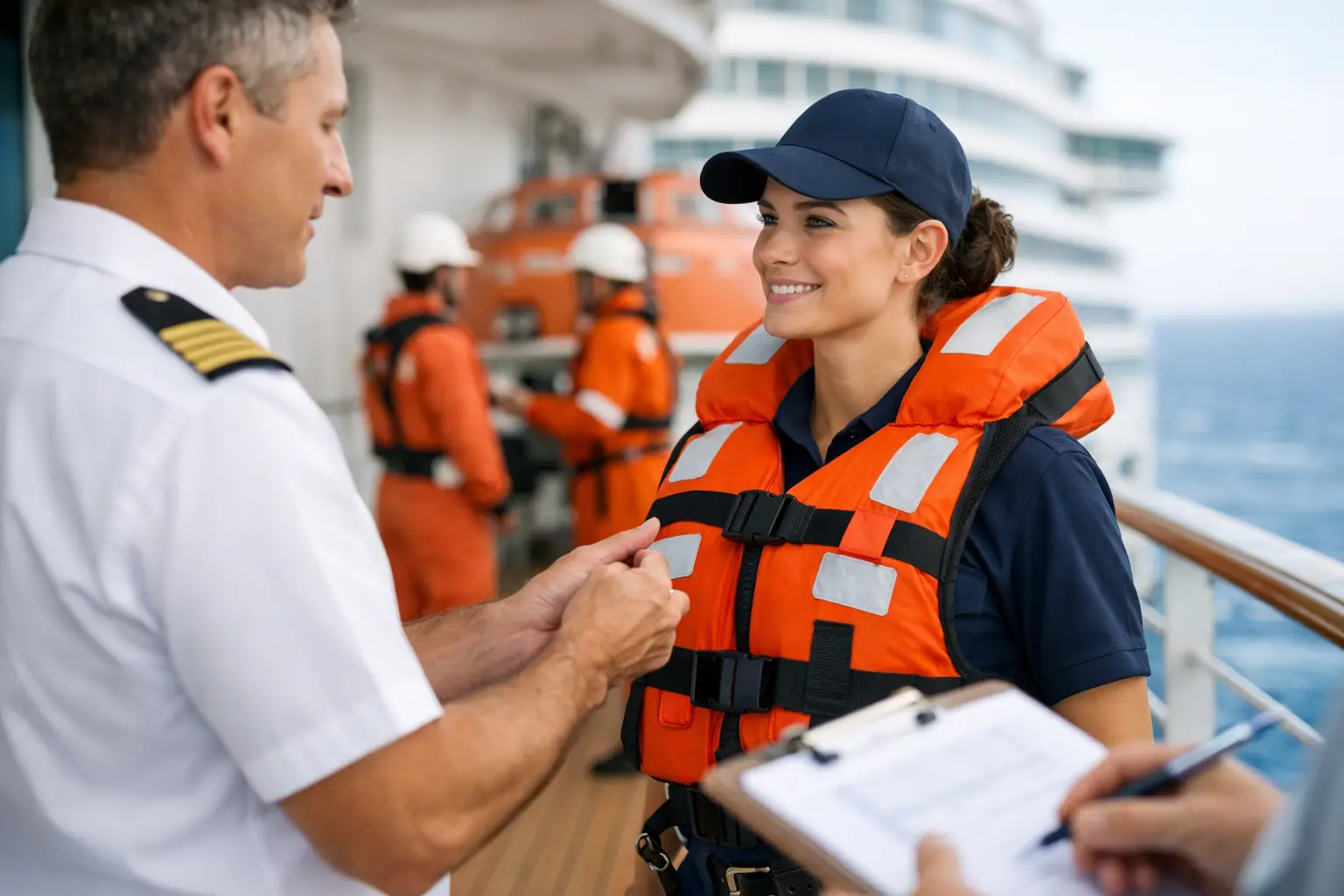
A cruise ship contract can move quickly from job offer to joining instructions. If one certificate is expired, missing, or issued by the wrong authority, that opportunity can disappear just as quickly. Understanding cruise ship training requirements before you apply helps you prepare the correct documents, avoid last-minute course bookings, and join your vessel ready for duty.
The exact requirements depend on your position, the ship’s flag, the cruise line, and the itinerary. A bartender, engineer, housekeeping attendant, youth staff member, deck officer, and security guard do not follow the same training path. Still, most crew members begin with a core set of STCW safety and security certificates, valid medical fitness documentation, and company-specific onboarding.
Cruise Ship Training Requirements Start With STCW
The International Convention on Standards of Training, Certification and Watchkeeping for Seafarers, known as STCW, sets the baseline for training and competency at sea. For most entry-level cruise ship roles, the starting point is STCW Basic Safety Training, sometimes called Basic Training.
This package normally includes four required elements: Personal Survival Techniques, Fire Prevention and Fire Fighting, Elementary First Aid, and Personal Safety and Social Responsibilities. Together, they prepare crew to respond to abandon-ship situations, recognize fire risks, provide basic aid, and work safely within the shipboard chain of command.
These certificates are not a formality. Cruise ships operate as self-contained communities, often carrying thousands of guests and crew. Every person onboard must understand alarms, muster stations, emergency duties, protective equipment, reporting procedures, and their role during an incident.
Your training must be issued or accepted under the requirements of the vessel’s flag administration. Before enrolling, confirm that the course provider, delivery method, certificate format, and approval status match the flag and employer requirements for your intended role. A low-cost course that is not accepted by the cruise line can cost more in lost joining time than a properly approved pathway.
Security Awareness or Designated Security Duties
Most cruise crew also need security training under the ISPS Code and STCW security provisions. The right course depends on whether your job includes assigned security responsibilities.
Security Awareness training is generally intended for personnel without designated security duties. It covers recognizing security threats, reporting suspicious activity, understanding security levels, and following shipboard procedures.
Personnel assigned specific security duties may need Designated Security Duties training instead. This goes further into inspections, restricted areas, security equipment, incident response, and maintaining security measures onboard. Do not assume your job title tells the full story. Ask the recruiter or crewing department which certificate is required for the actual duties listed in your contract.
Passenger Ship Training Can Be Role-Specific
Cruise ships are passenger vessels, and passenger safety introduces training requirements beyond the basic STCW package. Whether you need these courses depends on your duties during an emergency, not simply on whether you work near guests.
Crew who assist passengers during an evacuation may require Crowd Management training. This is common for guest-facing departments, including hotel, food and beverage, retail, entertainment, and housekeeping. Training focuses on clear communication, passenger movement, emergency behavior, and control of access routes.
Personnel who take charge of passengers in emergency situations may need Crisis Management and Human Behavior training. This is generally aimed at officers and crew with leadership responsibilities during muster, evacuation, or emergency response. Some positions also require Passenger Safety, Cargo Safety, and Hull Integrity training, especially when the role involves ship operations or the protection of watertight integrity.
There is no benefit in completing every passenger ship course without a defined need. Requirements vary by cruise line and department. The efficient approach is to secure the universal certificates first, then add role-specific training after confirming the position’s matrix with the employer.
Medical Fitness Is a Joining Requirement, Not an Afterthought
A valid seafarer medical certificate is essential for shipboard employment. Cruise work can involve long hours, movement on stairs and decks, emergency drills, changing climates, and limited access to shore-based care. The medical examination confirms that you are fit to perform your assigned duties safely.
The accepted medical standard depends on the flag state and company policy. Some employers specify a particular examination form or approved physician network. Others accept medical certificates issued under recognized maritime standards, provided they remain valid through the joining period.
Schedule your medical early. A medical certificate can be delayed by follow-up tests, prior health conditions, vision requirements, vaccinations, or administrative corrections. If you take regular medication, bring accurate records and ensure you understand how to carry an adequate supply when traveling to join the ship.
Vaccination requirements can also change according to itinerary, port rules, and company policy. Check your joining instructions rather than relying on requirements from a previous contract.
Documentation Must Match Your Certificates
Training is only useful when your records are accurate and easy for a crewing team to verify. Your name should appear consistently across your passport, seaman’s book or discharge book, medical certificate, STCW certificates, and employment documents. Differences in spelling, date of birth, or nationality can trigger avoidable delays.
Before submitting documents, check certificate numbers, issue dates, expiry dates, approval references, signatures, and any required endorsements. Keep clear digital copies in a secure folder that you can access while traveling. A reliable connection matters here: onboarding requests, certificate uploads, visa updates, and travel changes often arrive when you are between ports or airports.
You may also need a valid passport, applicable visas, police clearance or background checks, a seaman’s book where required, and proof of prior sea service. The cruise line or its crewing agency will set the final documentation list.
Company Training Happens After the Core Certificates
STCW certification establishes a common safety baseline, but each cruise line has its own safety management system, operational procedures, and service standards. Once hired, expect company induction and familiarization training before or immediately after joining.
This may cover the vessel’s layout, emergency signals, assigned muster duties, guest safeguarding policies, sanitation standards, environmental procedures, harassment prevention, alcohol and drug policies, and department-specific equipment. Crew may also complete regular drills and refresher training throughout the contract.
For hotel and hospitality roles, employers often assess practical service skills, spoken English, and guest interaction. For technical and deck roles, they may verify licenses, endorsements, watchkeeping competency, and sea service. For child-facing or medical positions, additional background screening and professional credentials may apply.
How to Prepare Without Losing Time
Start by identifying the role you want, not just the ship you want to join. A clear target position tells you which certificates are essential now and which can wait. Then compare your existing documents against the employer’s current requirements, paying close attention to expiration dates and flag acceptance.
A practical preparation sequence is to obtain your Basic Safety Training, complete the appropriate security course, arrange your medical examination, and organize your digital document file. Add passenger ship training when your intended role requires it. If you are returning to sea, verify whether any refresher training is due before paying for a full course again.
Online learning can reduce the time spent traveling to a training center, especially between contracts. However, maritime training is regulated by competence requirements, and some practical elements may require approved assessment or simulation. Always confirm what is included, how assessment is conducted, and whether the certificate is accepted for your intended vessel and flag.
Marine Pro Academy is built around this reality: seafarers need a clear path to compliant training, accessible records, and dependable connectivity without adding unnecessary steps between them and their next contract.
Your fastest route to a cruise ship is not collecting the most certificates. It is carrying the right, valid, verifiable certificates for the role you have been offered – with enough time to resolve any issue before your joining date.
Leave a Reply