
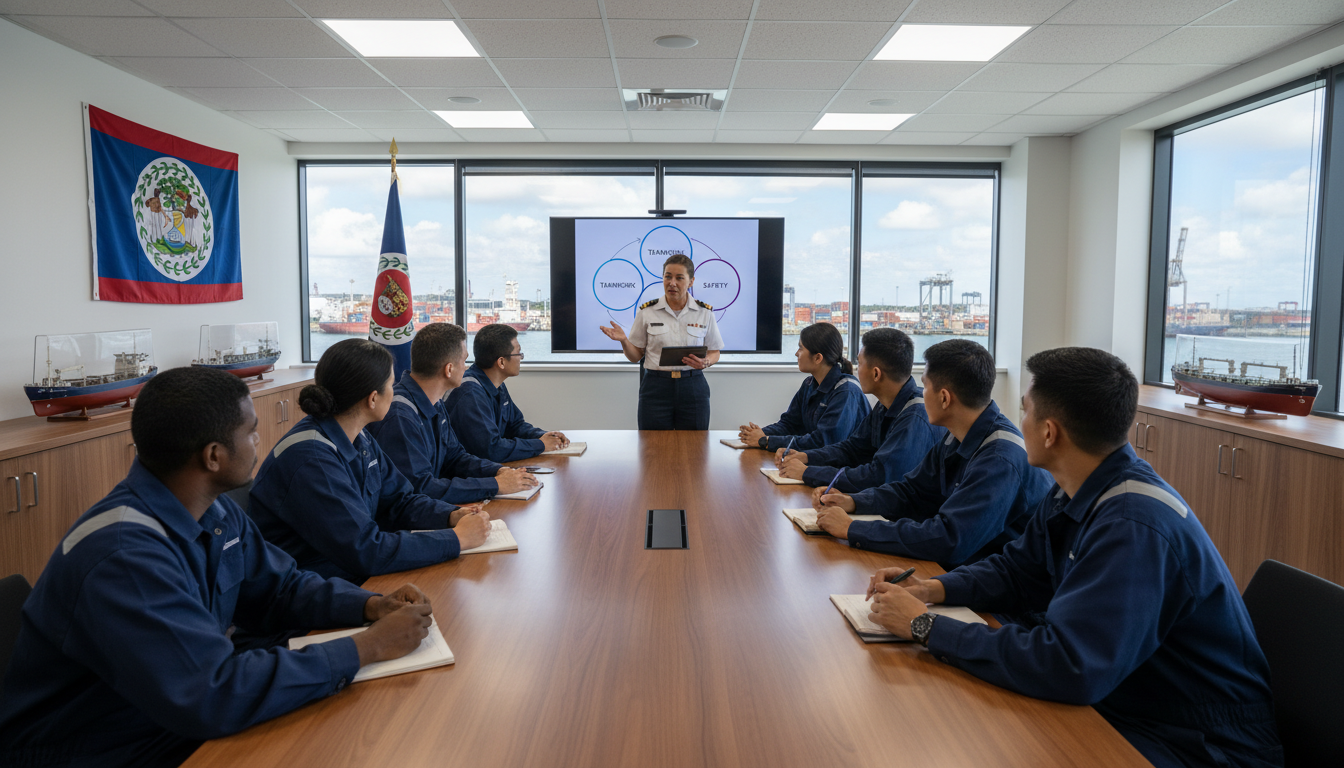
Belize PSSR 2026 training should help seafarers connect Personal Safety and Social Responsibilities with the real behaviour expected onboard: safe work, clear communication, professional conduct, teamwork and appropriate reporting. A useful course should explain the current applicable competence without implying that every amendment or transition rule applies identically to every learner.
What Changed in the International Framework
The STCW amendments in IMO resolution MSC.560(108) introduced competence concerning prevention of and response to violence and harassment, including sexual harassment, bullying and sexual assault. When evaluating training described as “2026 updated,” check whether the provider has incorporated the relevant outcomes and whether the course is approved for the specific certificate being offered.
The existence of an amendment does not mean every requirement applies in exactly the same way to every learner on the same date. Course descriptions should distinguish formally required content from supplemental professional-development material and explain the syllabus and assessment clearly.
What PSSR Is Meant to Develop
Personal Safety and Social Responsibilities is a foundation for living and working safely in the shipboard environment. It brings together safe work practices, effective human relationships, communication, emergency awareness and individual responsibility. At sea, the same task may involve several departments, nationalities and reporting lines, so clear communication and respectful behaviour matter every day.
Good PSSR learning connects formal rules with realistic decisions: asking for clarification, recognizing unsafe conditions, respecting boundaries, reporting concerns through the proper channels and understanding where authority and escalation responsibilities sit.
Harassment, Bullying and Respectful Conduct
Training should help seafarers recognize inappropriate behaviour, understand available reporting routes and respond without attempting to investigate matters personally. Scenarios can explore repeated harmful conduct, safe bystander responses, confidentiality and the responsibilities of supervisors.
The aim should not be to promise a particular outcome after a report. Instead, the course should explain the importance of established company procedures, appropriate escalation and protecting crew welfare while respecting privacy and role boundaries.
Safe Work, Human Factors and Multinational Crews
Many incidents involve a chain of decisions rather than a single technical failure. A crew member may notice an unsecured walkway, a fatigued colleague, an unfamiliar task or conflicting priorities. PSSR should help the learner recognize risk, pause where appropriate, communicate the concern and follow the relevant onboard process rather than improvising beyond authorization.
Multinational crews also depend on clear handovers, closed-loop confirmation and respectful questions. Useful exercises can involve a junior crew member escalating a concern, a cross-department task with competing priorities or a supervisor explaining a safety instruction to someone unfamiliar with the vessel.
Translate Theory Into Practical Decisions
Imagine a team preparing equipment for departure when a worker notices an unsecured area. The schedule is tight and other departments are waiting. A useful PSSR discussion asks what information needs to be communicated, what work should pause under the relevant procedures and who has authority to decide the next steps.
Another scenario might involve repeated inappropriate comments during a pressured handover. The learning focus should be on recognizing the behaviour, using established reporting channels, respecting confidentiality and avoiding personal confrontation or unofficial investigation.
Choosing the Right Belize PSSR Pathway
Marine Pro Academy describes its Belize PSSR 2026 training as updated for the new competence. Before booking, confirm the issuing authority, delivery and assessment process, the exact competence reference and whether your employer has additional local or company-specific requirements.
Seafarers who need the wider basic-safety pathway can also review the Belize Basic Safety Training bundle. For wider planning, Marine Pro Academy’s STCW catalogue and course bundles can help compare the available training options.
What Crew Managers and Supervisors Should Check
Review training-matrix records, course-completion evidence and certificate-verification arrangements before deployment. Where the vessel has its own anti-harassment policies, connect the PSSR competence to onboard reporting systems and supervisory responsibilities.
Supervisors should also reinforce PSSR during normal work. A completed certificate does not mean a new crew member understands every procedure on a particular vessel. Clear pre-task discussions, respectful feedback and proper familiarization remain essential.
After the Course: Make the Learning Stick
After completion, review the issued certificate for accurate personal information and the exact competence reference. Save evidence of completion, any verification link and the applicable renewal or refresher instructions, and submit the record early enough for employer review.
Then identify a few behaviours to practise onboard, such as asking for clarification before unfamiliar tasks, reporting unsafe observations promptly and using respectful communication during pressured handovers. Revisiting these behaviours after joining helps connect the training pathway with everyday professional practice.
Frequently Asked Questions
Does a course labelled 2026 automatically include every applicable amendment?
No. Check the syllabus, approval scope and assessment process for the specific course.
Is PSSR only about emergency drills?
No. It also addresses everyday responsibilities, teamwork, communication and professional conduct.
For companies, the practical follow-up is to connect the course record with the vessel’s own policies and reporting routes. That may include familiarization with whom to contact, how confidential concerns are handled, what supervisors are expected to do and where crew can find the relevant procedures. This matters because regulatory learning provides a common foundation, while daily behaviour depends on how clearly the organisation reinforces those expectations onboard. A useful review after training is therefore not only whether the certificate was issued, but whether the seafarer understands how the competence applies in the actual workplace and knows where to seek guidance if a situation is unclear.
Can online learning replace vessel familiarization?
No. Online learning can support the competence where appropriate, but vessel-specific familiarization and company procedures still apply.
Should harassment and bullying awareness be included?
Current training should address the applicable competence and explain appropriate reporting, respectful conduct and role boundaries in line with the course’s approved scope.
Should seafarers verify the certificate and issuer?
Yes. Marine Pro Academy also provides a certificate verification guide that explains why checking documents before joining is important.
The purpose of Belize PSSR 2026 training is not simply to add another certificate to a crew file. The goal is to support safer decisions, clearer communication and more professional conduct onboard while keeping the training pathway aligned with the applicable approved competence.
Leave a Reply