
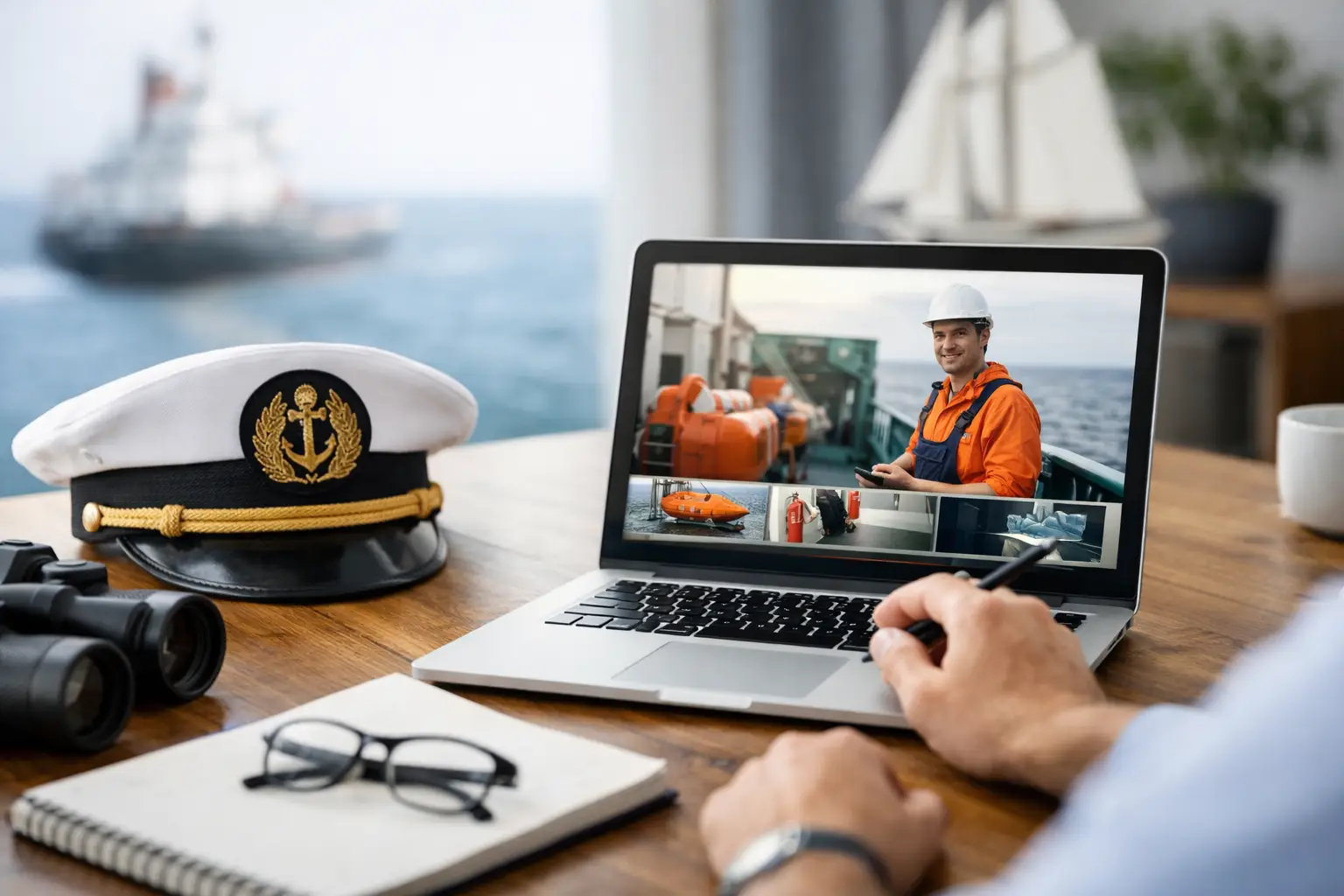
If you are trying to get hired fast or keep your certificates current between contracts, time off the vessel matters. So does access. A shore-based training center may not fit your schedule, your location, or your budget. That is why demand for the stcw basic training online package keeps growing among cruise crew, merchant mariners, offshore workers, and first-time job seekers.
The real question is not whether online training sounds convenient. It is whether the package gives you the right compliance pathway for your role and flag requirements.
What an STCW basic training online package usually includes
A standard STCW basic training pathway covers the core safety subjects required for many seagoing roles. Depending on the provider and approval scope, the online package may include theory for Personal Survival Techniques, Fire Prevention and Fire Fighting, Elementary First Aid, and Personal Safety and Social Responsibilities. In some training catalogs, security modules such as Security Awareness are offered separately or bundled into a larger package.
That distinction matters. Some seafarers need only the core A-VI/1 elements to move forward with hiring or onboarding. Others need a broader package because the employer, vessel type, or flag administration expects additional security training. If you are comparing providers, do not assume every package contains the same modules just because they use similar product names.
For many learners, the value of an online package is straightforward. Instead of purchasing each course one by one and managing multiple enrollments, you complete the theory in one structured track. That reduces admin time and helps you avoid gaps in required training.
Why seafarers choose an online STCW package
For working crew, the biggest advantage is flexibility. Shipboard life rarely gives you a clean classroom schedule. You may have internet access one day and limited connectivity the next. You may be on leave in one country and joining a vessel in another. A self-paced online package works because it lets you study when your watch schedule allows, rather than when a training center happens to have seats available.
There is also a cost and logistics side to this decision. Traditional in-person attendance often means travel, hotel stays, transport, and lost time. For an entry-level seafarer paying out of pocket, that can delay certification and job applications. For active crew, it can mean using valuable leave for classroom attendance instead of rest or family time.
An online package does not remove every requirement. Some STCW elements may still involve practical assessment depending on course design and approval framework. But it can remove a large part of the friction, especially for theory components that can be delivered effectively through e-learning and virtual simulation.
Who benefits most from an stcw basic training online package
This format is a strong fit for new entrants who need recognized training quickly so they can apply for roles with cruise lines, commercial vessels, ferries, or offshore operators. It is also useful for experienced seafarers who are adding required modules, replacing expired certificates, or aligning their documents with a new employer’s compliance expectations.
It is especially practical if you are often away from major maritime hubs. Many crew members work from regions where approved classroom options are limited or fully booked. In that situation, online access is not just convenient. It can be the difference between staying employable and missing a joining date.
That said, online learning is not ideal for everyone. If you learn best in a face-to-face setting, need constant instructor prompting, or struggle to stay on track independently, a self-paced package may feel slower than expected. Convenience helps only if you actually complete the coursework.
What to check before you enroll
Approval status should be your first filter. A package needs to be delivered under the proper approval framework and aligned with STCW requirements, not simply marketed with maritime language. Seafarers should verify whether the courses are IMO-compliant, flag-approved where applicable, and accepted by employers operating internationally.
The second point is course scope. Read the module list carefully. A four-course basic safety bundle is not the same as a six-course package that adds security components or other required training. If your target role involves passenger operations, ship security, or designated duties, your required training may go beyond core basic safety.
The third point is delivery method. Some providers offer basic video lessons only. Others use interactive e-learning and virtual simulation that better reflect onboard emergency scenarios. That difference affects both comprehension and completion. Good online maritime training should feel operational, not academic.
Finally, check certificate issuance time and learner support. If you need documents for an urgent application, delays in grading or admin processing can create real employment problems. Fast support matters when you are trying to join a vessel on schedule.
Online package vs buying modules separately
For some learners, separate modules make sense. If you already hold part of the required training and only need one or two missing subjects, a package can be unnecessary. The same applies if your employer is paying only for specific courses.
But if you are starting from zero or rebuilding your file after expirations, a package is usually the cleaner option. It gives you a defined route, one purchase, and a better view of what is complete and what is still pending. That is valuable when your paperwork already includes visas, medicals, seaman book processing, endorsements, and joining instructions.
There is also a psychological benefit. Completing one structured training path often feels easier than managing four or six separate enrollments. For busy seafarers, less fragmentation usually means better completion rates.
How the best providers remove friction
A serious online provider understands that maritime training is not an abstract education product. It sits inside a compliance timeline. You may need your certificates to apply this week, pass employer screening next week, and join a vessel shortly after that.
That is why the strongest platforms focus on immediate access, self-paced study, and clear documentation workflows. They also understand that learners may be onboard, traveling, or operating across time zones. Support needs to be practical, not slow or generic.
Marine Pro Academy is built around that reality. Its platform combines approved STCW e-learning with virtual simulation and related documentation services, which helps seafarers handle training and career-readiness tasks in one place. For many crew members, that reduces back-and-forth between multiple providers and keeps the compliance process moving.
A closer look at the trade-offs
The main benefit of an online package is speed with flexibility. The trade-off is that you need discipline. No one is physically pulling you into a classroom. If your contract schedule is chaotic, self-paced learning can either fit perfectly or get pushed aside for weeks.
There is also the question of employer preference. While online approved training is widely used across the international maritime workforce, you still need to make sure your specific employer, vessel type, and flag requirements are matched correctly. “Accepted in the industry” is not the same as “appropriate for my exact joining requirement.” That is why reading the course approval details matters.
Another trade-off is internet access. Even the best platform cannot fix unstable onboard connectivity. If you plan to study at sea, download options, progress saving, and flexible access become more important than flashy design.
How to decide if the package is right for you
Start with your end goal. If you are applying for your first shipboard role, a bundled package often gives you the fastest path to completing the required theory. If you are already sailing and only missing a specific module, buy only what you need.
Next, map your deadline. If you need certificates urgently, choose a provider that states approval status clearly, gives immediate course access, and has a reputation for prompt processing. Convenience without timely issuance does not solve a joining problem.
Then look at the total picture. Training is only one part of employability. Many seafarers also need help with seaman books, endorsements, and related administrative steps. A provider that understands the full compliance chain can save time, especially when your contract window is tight.
The right stcw basic training online package is not just a cheaper way to study. It is a practical compliance tool for people who work in a schedule-driven industry where delays cost opportunities. If the package is approved, structured well, and matched to your role, it can shorten the path between needing certification and being ready to sail.
Choose the option that keeps your training recognized, your paperwork moving, and your next contract within reach.

Leave a Reply