
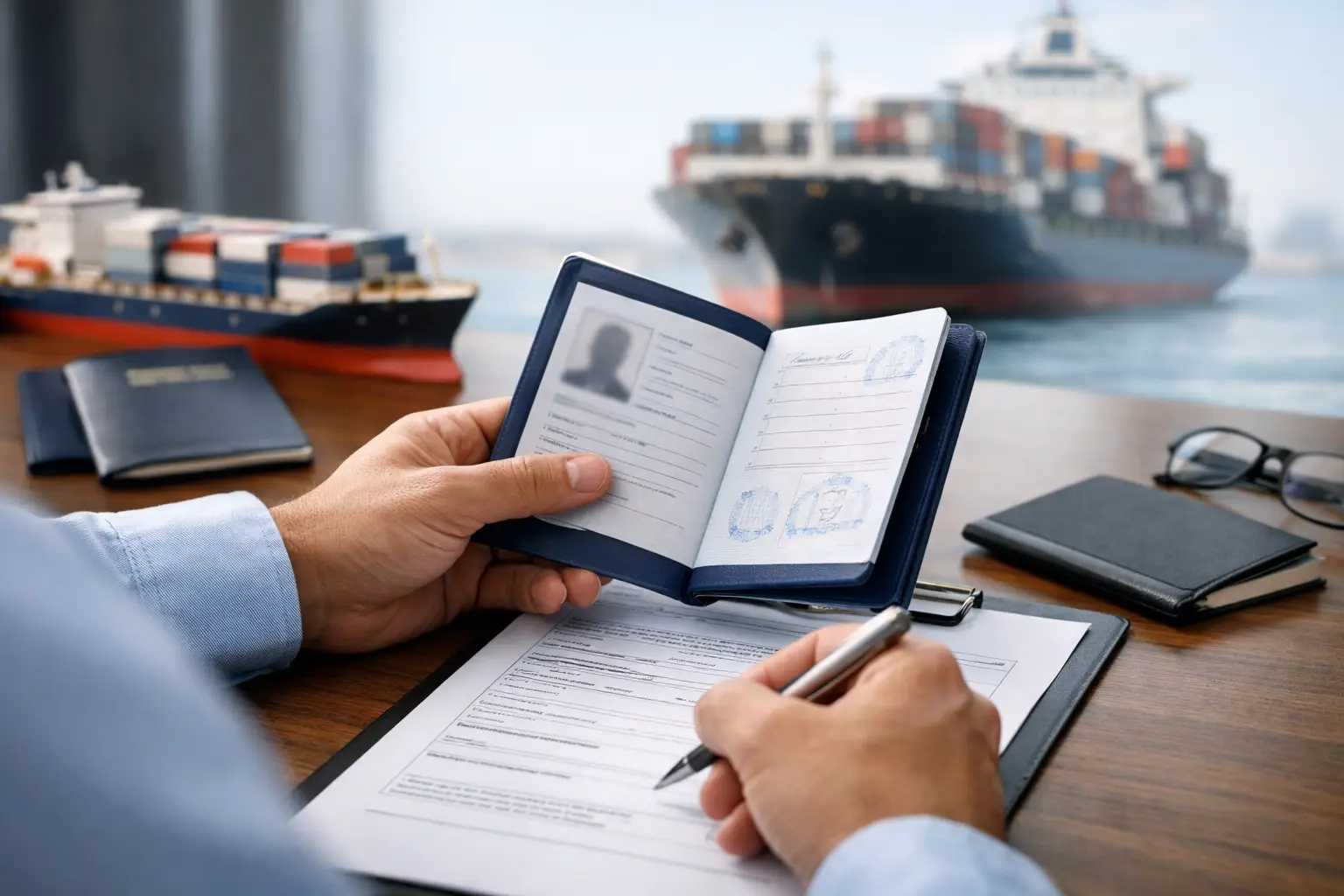
A missed joining date often has nothing to do with seamanship and everything to do with paperwork. If your Panama seaman book application is incomplete, inconsistent, or submitted with the wrong supporting documents, the delay can affect embarkation, employer clearance, and your next contract.
For working crew and first-time applicants, the goal is not just to apply. The goal is to apply correctly the first time, with documents that match your rank, vessel type, and hiring timeline. That matters because a seaman book is more than an ID-style document. It is part of your employability file and, in many cases, a basic requirement for proving sea service and serving lawfully on board.
What a Panama seaman book application is really for
A Panama seaman book is generally used to identify a seafarer serving on board a vessel and to record service history. For many crew members, it becomes one of the core maritime documents requested during onboarding, crew changes, and employer screening. It can also support future applications where recorded sea time matters.
That does not mean every applicant faces the exact same process. The required paperwork can vary based on whether you are applying as a new entrant, an experienced rating, an officer, or crew assigned to a cruise, cargo, offshore, or yacht operation. The flag administration, employer expectations, and document agent workflow all affect timing.
In practical terms, a strong application does three things. It confirms your identity, supports your professional status as a seafarer, and reduces questions during compliance checks. If one of those pieces is weak, the review slows down.
Panama seaman book application requirements
Most applicants should expect the Panama seaman book application process to start with basic identity and maritime employment documents. That usually includes a valid passport, passport-style photo, and supporting proof that you are serving at sea or preparing to do so under a legitimate maritime role.
Depending on the case, you may also need a medical certificate, STCW training certificates, a letter from a shipping company, prior sea service evidence, or an existing seaman book from another flag. The exact mix depends on your background and the purpose of the application. A first contract applicant may need to prove training readiness. An experienced seafarer may need to show sea time consistency and role continuity.
This is where many avoidable delays begin. Names that do not match across passport, certificates, and application forms can trigger manual review. Expired medicals create obvious problems, but outdated course certificates can also raise concerns if the employer or processing party expects current compliance. Low-quality scans, cropped pages, and unreadable stamps are another common issue.
If you are applying while on rotation, timing matters just as much as accuracy. Shipboard internet, scanner quality, and your ability to answer follow-up requests quickly can all affect turnaround.
Documents should match your actual employment path
A common mistake is submitting a generic file set without thinking about the vessel or role. A deck cadet, steward, able seaman, motorman, and security-related crew member may all require different supporting context. If your documents suggest one position but your company letter references another, expect questions.
It is better to build the file around the real purpose of the document. If you are joining a vessel soon, your file should clearly support embarkation readiness. If you are documenting existing service, your records should align with prior contracts and sea time evidence.
How the application process usually works
In most cases, the process begins with document collection and review. After that, your application data is prepared, checked for consistency, and submitted for processing. If anything is missing or unclear, the process usually pauses until corrected documents are provided.
That sounds simple, but the practical difference between a smooth application and a delayed one is the quality of the pre-check. Seafarers often focus on speed, which is understandable, especially if a joining date is near. But speed without document control often creates more delay than a careful first review.
A reliable process usually follows this order: gather documents, verify names and dates, confirm certificate validity, submit clear scans, and respond quickly to any request for clarification. If you are using a maritime documentation service, the value is not just submission. It is the screening that happens before submission.
For crew members balancing contracts, travel, and course renewals, that screening can save days or even weeks.
How long does a Panama seaman book application take?
There is no single answer that fits every case. Processing time depends on document quality, applicant profile, and whether extra verification is required. Clean files move faster. Files with mismatched names, missing employer support, or unclear certificate records take longer.
If you need the document for an upcoming embarkation, do not assume a last-minute request will be workable. Start early enough to allow for corrections. Administrative timelines are rarely the problem by themselves. The real issue is the back-and-forth created by incomplete files.
Common reasons applications get delayed
Most delays come from operational errors, not unusual legal problems. The first is inconsistency across documents. If your middle name appears on your passport but not on your course certificates, that can lead to follow-up. The second is poor scan quality. If a reviewer cannot clearly read numbers, stamps, or expiration dates, they will not guess.
The third issue is submitting outdated compliance documents. A certificate that was acceptable for your last job may not support your current file if it is expired or not relevant to the position now listed. The fourth is weak employer evidence. If your application depends on a company letter, it should be current, readable, and aligned with your role.
There is also a less obvious delay factor: fragmented administration. When your training, certificates, and seaman book paperwork are handled by separate providers with no coordination, small inconsistencies are more likely. That is one reason some seafarers prefer to manage training and documentation through one provider when possible.
How to prepare before you apply
Before starting your Panama seaman book application, review your documents as if you were the compliance officer checking them. Does every document show the same name format? Are expiration dates still valid? Are all pages complete and readable? If your role changed recently, do the supporting records reflect that change clearly?
You should also think about timing in relation to your contract. If you are at sea, ask yourself whether you can respond promptly if additional documents are requested. If not, it may be better to prepare everything before joining or while on leave rather than trying to fix issues from limited onboard connectivity.
For new seafarers, the priority is proving readiness. That usually means making sure your basic training record is complete and your identity documents are current. For experienced crew, the priority is continuity. Your sea service, prior books, company letters, and qualifications should tell one consistent story.
Why training status can affect your application
Even when the seaman book itself is an administrative document, your training profile often shapes how credible and complete your file appears. If your role requires mandatory STCW courses, reviewers and employers expect those records to be current and relevant.
That is especially important for seafarers moving quickly between training completion and job placement. If your theory modules, practical components, or security-related courses are still in progress, the application may need to be timed carefully so your file does not look incomplete. Providers that handle both compliance training and documentation support can reduce that friction because the paperwork is prepared around real maritime hiring requirements, not generic admin assumptions.
Should you apply alone or use a service?
It depends on your experience level, your timeline, and how confident you are in your file. If you have handled maritime documentation before and your records are organized, a direct process may be manageable. If your joining date is close, your documents come from multiple countries, or you are unsure what supporting papers apply to your role, using a specialized service can be the safer route.
The advantage is not convenience for its own sake. It is error reduction. A seafarer-centric provider understands how STCW records, medical certificates, employer letters, and identity documents fit together in a real hiring environment. That matters when your goal is not just approval, but approval in time to stay employable.
Marine Pro Academy fits that practical model by combining online maritime training with documentation support, which helps reduce gaps between course compliance and career paperwork.
A Panama seaman book application is one of those tasks that feels administrative until it starts holding up your contract. Treat it like any other compliance item on your career path – prepare early, submit a clean file, and make every document support the same professional story.

Leave a Reply