
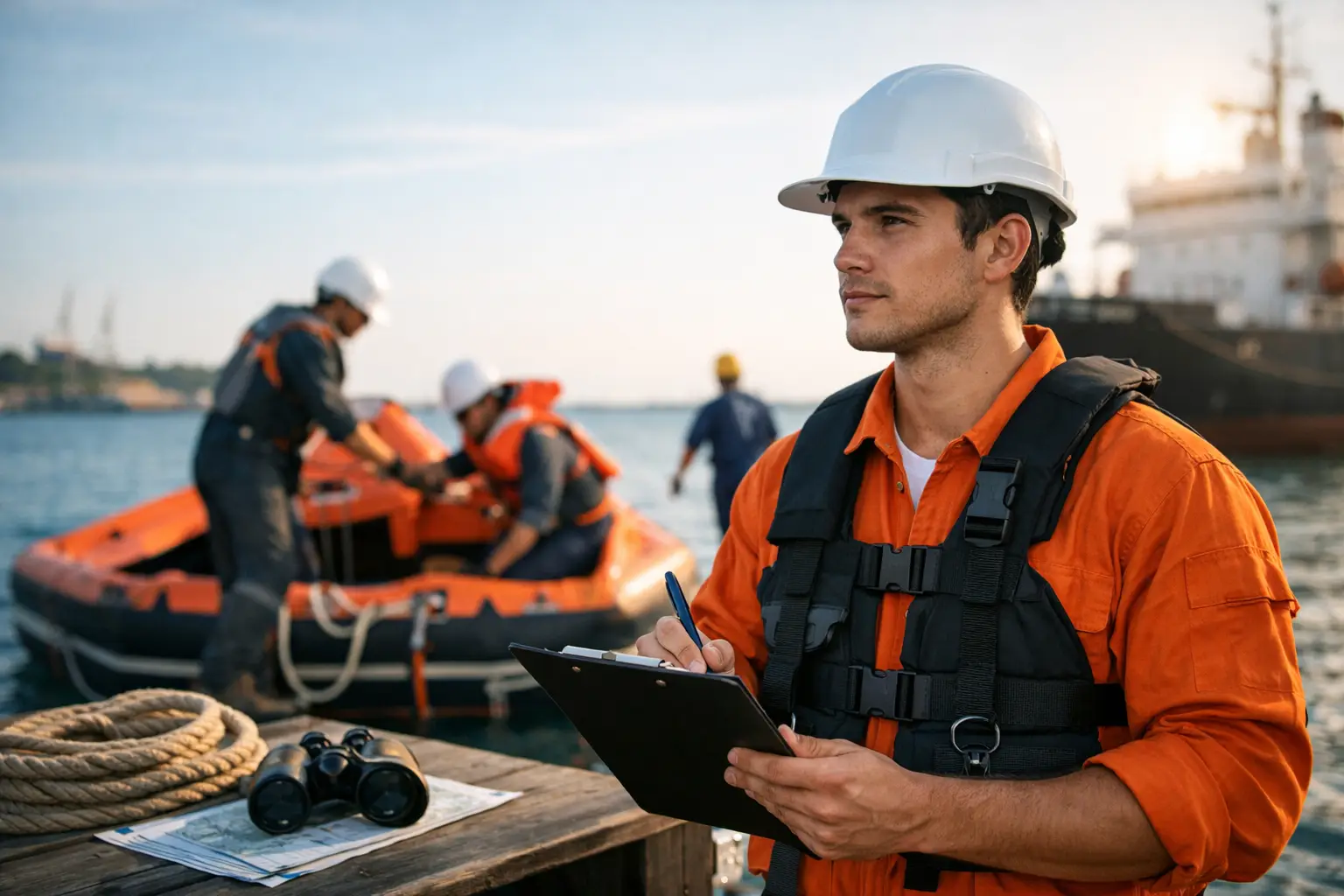
A lot of seafarers lose time before they ever step onboard – not because they lack motivation, but because they start the job search without the right training, documents, or sequence. If you want to know how to prepare for seafarer jobs, the shortest path is not sending more applications. It is making sure your compliance, credentials, and availability match what employers actually require.
That matters whether you are applying for your first cruise ship contract, moving into merchant shipping, or returning to sea after a break. Hiring moves quickly when a candidate is already trained, documented, and ready to mobilize. It slows down fast when certificates are missing, expired, or not aligned with vessel type and role.
How to prepare for seafarer jobs before you apply
The first step is to understand that maritime recruitment is not like general shore-based hiring. Employers are not only evaluating experience. They are checking whether you can legally and safely join a vessel under international requirements, company procedures, and flag-state rules.
For most entry-level and operational roles, that starts with STCW. Basic safety training is often the baseline because it covers core emergency and safety competencies required across the industry. Depending on your role, you may also need security training, crowd management, designated security duties, or other vessel-specific courses.
This is where many applicants make a costly mistake. They wait until they receive a job offer before starting training. Sometimes that works, but often it delays joining dates or causes the employer to move to another candidate. If you are serious about learning how to prepare for seafarer jobs, think in terms of readiness, not just interest.
Start with the training employers expect
Your training plan should match the type of vessel and position you want. A deck cadet, galley utility, AB, wiper, offshore crew member, and cruise ship hospitality worker do not all need the exact same package. There is overlap, but there are also role-specific requirements.
At minimum, many job seekers begin with STCW basic safety modules such as Personal Survival Techniques, Fire Prevention and Fire Fighting, Elementary First Aid, and Personal Safety and Social Responsibilities. Security Awareness is also commonly required, and for some positions Designated Security Duties is the better fit. If you are targeting passenger vessels, crowd management or crisis-related training may also become necessary.
The practical point is simple: do not buy courses based on guesswork. Match training to the vacancy type. If you are entering the industry, a bundled package often makes more sense than enrolling one module at a time because it reduces delays and helps you complete the baseline requirements in a clean sequence.
Online delivery can also change the timeline. For seafarers already onboard or based far from a training center, self-paced e-learning removes a major barrier. Instead of waiting for classroom availability and travel dates, you can complete approved theory training around your watch schedule or while at home between contracts. That flexibility is not just convenient. It can be the difference between applying now and waiting another month.
Get your documents in order early
Training alone does not make you job-ready. Maritime hiring is document-heavy, and employers usually want to see that your paperwork is current before they invest time in processing you.
Your passport must be valid for a sufficient period. Your medical fitness certificate needs to meet employer and flag requirements. You may also need a seaman book, depending on the vessel, flag, and role. Some candidates also need endorsements or flag-related documentation before final clearance. If you leave this until the last minute, the training can be complete and you can still miss deployment.
There is no single global checklist that applies to every case. A cruise line may ask for one document set, while a cargo operator or offshore employer may ask for another. That is why early planning matters. Build your file before you start applying aggressively.
Keep digital copies organized in one folder and name them clearly. Recruiters and crewing departments move fast, and sending the wrong file or an unreadable scan creates unnecessary friction. A candidate who can provide clear certificates, passport pages, medicals, and supporting documentation the same day usually looks more employable than someone who needs a week to find them.
Build a job profile that reflects shipboard reality
A seafarer CV should be direct, factual, and role-specific. Maritime employers are not looking for creative language. They want to see rank or target position, vessel type, relevant certificates, sea service, technical skills, and availability.
If you are new to the industry, do not try to hide that. Instead, show readiness. List completed STCW training, security courses, language ability, customer service background if applying to cruise roles, mechanical experience if applying to engine or deck support roles, and your earliest joining date. For entry-level applicants, compliance and availability often matter as much as experience.
If you already have sea time, make your vessel history easy to follow. Include vessel type, gross tonnage if relevant, dates onboard, and core duties. Recruiters should not have to decode your work history. Clarity supports credibility.
This also applies to your email address, phone availability, and response time. In maritime recruitment, opportunities can be time-sensitive. If a crewing officer contacts you and you reply two days later, the opening may already be filled.
How to prepare for seafarer jobs by targeting the right roles
One of the fastest ways to waste time is applying for jobs you are not yet qualified to join. It sounds obvious, but it happens constantly. A new entrant applies for roles requiring prior sea service. An applicant with only basic safety training targets positions that also require advanced security or passenger-vessel certification. Then they assume the market is closed to them.
A better approach is to target roles where your current training and documents already meet most of the requirement. That might mean starting with entry-level support positions, hotel operations on cruise vessels, OS or wiper pathways, galley roles, stewarding, or trainee assignments depending on your background.
This is not about lowering standards. It is about matching your application strategy to your compliance status. Once you gain onboard experience, upgrading becomes easier and your next move carries more weight.
There is also a trade-off here. Some candidates want to wait for the ideal vessel or company. Others take the first suitable contract to build sea time. Which path is better depends on your finances, long-term goal, and how urgently you need deployment. In many cases, the first contract is a platform, not a final destination.
Use timing to your advantage
Preparation is not only about what you have. It is also about when you have it ready. If your certificates will be complete in three weeks, your medical in four weeks, and your seaman book in six weeks, you are not fully available yet. That does not mean you cannot start applying, but you should be honest about your timeline.
The strongest candidates can say: training completed, documents in hand, ready to join. That statement reduces uncertainty for the employer. It also improves your chances during periods of urgent crew demand.
This is one reason online maritime training has become such a practical tool. It compresses preparation time and helps job seekers remove avoidable delays. A platform such as Marine Pro Academy is built around that reality – approved STCW training, flexible online access, and related documentation support for seafarers who need to move quickly without losing compliance.
Avoid the mistakes that keep candidates ashore
Most delays come from a short list of preventable problems. Candidates take non-approved training, complete the wrong course version, ignore certificate expiry dates, submit incomplete documents, or assume one employer’s requirement is the same as another’s.
Another common issue is treating training as a one-time event. Maritime compliance is ongoing. Certificates may need refreshers. Security roles may require additional endorsements. Passenger-vessel work may call for extra modules. The seafarers who stay employable are usually the ones who manage certification proactively rather than react only when a contract is on the line.
If you are switching sectors – from cargo to cruise, offshore to merchant, or yacht work to larger commercial vessels – review the role requirements carefully. Sea experience transfers, but compliance requirements do not always transfer in a simple way.
The best preparation is practical readiness
If you want a realistic answer to how to prepare for seafarer jobs, it comes down to four things: complete the right STCW training, organize your documents, target roles that fit your current profile, and make yourself available without delay. Everything else sits on top of that foundation.
The maritime industry does not reward vague interest. It rewards readiness. When your certificates are current, your paperwork is clean, and your application reflects the realities of shipboard hiring, you stop looking like a hopeful applicant and start looking like deployable crew.
Treat your preparation the way a vessel treats safety drills – done early, done correctly, and done before the real moment arrives.

Leave a Reply