
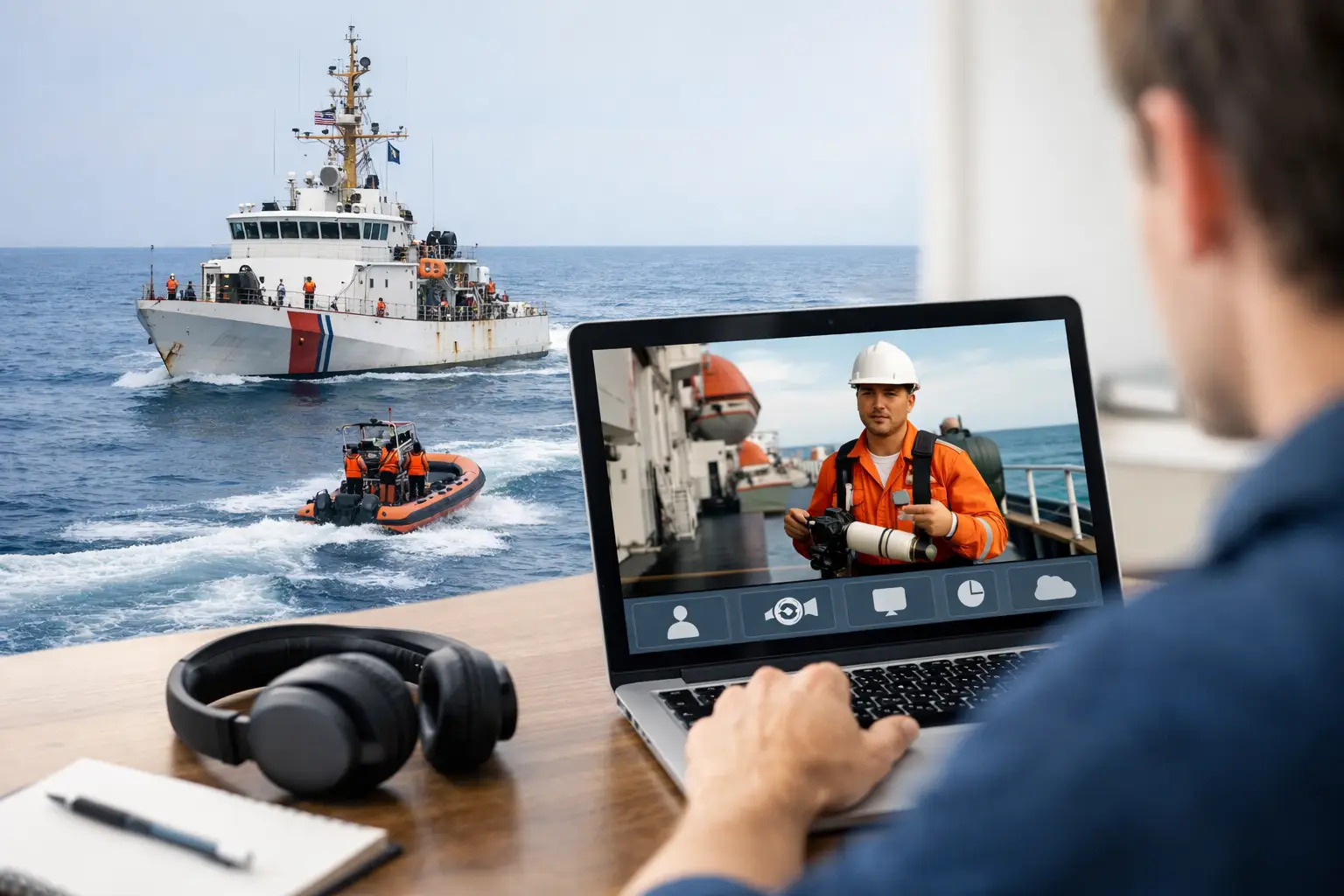
You do not have time to book a classroom, fly to a training center, lose a hitch, and hope the certificate arrives before your next joining date. That is why so many seafarers search for USCG approved STCW online options. The problem is that this phrase often gets used too loosely, and that is where costly mistakes start.
What people mean by USCG approved STCW online options
Most seafarers using this search term are trying to answer a practical question: which STCW requirements can be completed online, and which still require hands-on assessment or a separate approval path. That distinction matters because STCW is not one course. It is a framework covering multiple competencies, endorsements, and role-based training requirements.
Some modules are theory-heavy and fit e-learning well. Others involve practical demonstration, equipment handling, live drills, or supervised assessment. If you enroll in the wrong format, you may finish the coursework and still find that your employer, flag administration, or crewing department needs something different.
The smart approach is not to ask whether all STCW can be done online. It cannot. The better question is which parts of your training plan can be completed remotely without creating a compliance gap.
The real split: theory online, practical where required
For working crew, online delivery makes the most sense when the subject is knowledge-based and can be assessed through structured learning, scenario work, and controlled testing. Courses such as Personal Safety and Social Responsibilities, Security Awareness, Designated Security Duties, and some portions of Elementary First Aid theory are commonly suited to remote study, depending on the issuing approval and course design.
Where mariners get into trouble is assuming every Basic Safety Training component works the same way. It does not. Personal Survival Techniques and Fire Prevention and Fire Fighting, for example, are tied closely to practical competence. Even when theory is available online, practical elements may still need to be completed separately through an approved process.
That is not a weakness of online training. It is simply how maritime compliance works. A serious provider should tell you where e-learning is appropriate and where attendance, simulation, or practical verification still applies.
How to evaluate STCW online options without wasting money
If a course is marketed as one of the USCG approved STCW online options, look past the headline and verify the operational details. Approval language needs to be specific. You want to know who approved the course, what regulation or code section it aligns with, whether it is accepted for your intended vessel sector, and whether any onboard or in-person practical component remains outstanding.
This is especially important for seafarers applying across international fleets. A certificate can be legitimate and still not fit your immediate employment path if the employer expects a different flag approval, a bundled package, or a related endorsement completed at the same time. Cruise lines, offshore operators, yacht management companies, and commercial fleets do not all review documentation the same way.
A reliable provider will make the structure clear. You should be able to see whether the course is fully online, partly online, or online theory only. You should also know how assessment is handled, how fast certificates are issued, and whether the training is designed for active crew who may be studying from onboard vessels with inconsistent schedules.
Which STCW modules are most realistic for online study
For many seafarers, online training works best for required theory modules that support initial hiring, upgrading, or role expansion. Security Awareness and Designated Security Duties are strong examples because the learning outcomes are procedural, compliance-based, and closely tied to onboard conduct under the ISPS framework.
Personal Safety and Social Responsibilities is another good fit for e-learning because it centers on safe working practices, pollution prevention awareness, labor relations onboard, and emergency responsibilities. These topics benefit from structured study and scenario-based review rather than travel to a classroom just to sit through lectures.
Crowd Management, Crisis Management, and Ship Security Officer training may also be available through advanced online formats depending on the approval route and course structure. Here, the quality of instruction matters. A static slideshow is not enough for operational readiness. Stronger programs use guided modules, applied scenarios, and virtual simulation elements to help bridge the gap between theory and shipboard decision-making.
Why online format matters to employability
For seafarers, speed is not just convenience. It is employability. If your joining window is short or your contract depends on updated documentation, waiting weeks for seat availability at a shore-based center can cost you work.
That is where a serious online platform changes the equation. Self-paced study lets active crew train during leave, between contracts, or even while onboard when connectivity allows. Instead of building your life around a training center, the training fits around your rotation.
There is also a cost angle. Travel, hotel stays, local transport, meals ashore, and lost earning time can make a low-priced classroom course more expensive than a higher-quality online option. For job seekers funding their own credentials, that difference matters.
The trade-off: convenience is not the same as universal acceptance
This is where realism matters. Online delivery reduces friction, but convenience alone does not make a course suitable for every purpose. Acceptance depends on the specific approval, the issuing framework, the employer, and the certificate combination you need.
If you are entering the industry for the first time, you may need a pathway that combines online theory with later practical completion. If you are already sailing and only need a security, social responsibility, or role-specific upgrade, fully online options may be exactly what you need. If you are targeting a particular fleet segment, your crewing manager may prefer one approval route over another.
So the right answer is often: it depends on your current rank, vessel type, hiring timeline, and document profile. A good training provider should help you map that out before purchase, not after.
What a strong online STCW provider should offer
A serious maritime e-learning provider should do more than upload course files and send a certificate. The platform should be built for compliance and operational reality. That means clear approval status, IMO-aligned course structure, practical guidance on next steps, and certificate issuance that supports immediate job applications.
It should also recognize that seafarers rarely need one certificate in isolation. Many need bundled training, document support, and a straightforward path from enrollment to employable status. That is why integrated providers stand out. If you can complete required theory modules, add security training, and sort supporting maritime documentation through one system, you reduce delays and administrative errors.
Marine Pro Academy is built around that model, with online STCW theory, security and safety modules, virtual simulation support, and related seafarer documentation services designed for crew who cannot afford unnecessary downtime.
Questions to ask before you enroll
Before choosing among STCW online options, ask what exact certificate will be issued and under which approval. Ask whether any practical assessment remains. Ask how long access stays open, how quickly results are processed, and whether the course content fits first-time applicants, experienced crew, or both.
You should also ask the provider a more direct question: if I send this certificate to a crewing manager tomorrow, what job use case is it intended to support? If the answer is vague, keep looking. Maritime training is too expensive to buy on assumptions.
Choosing correctly when time is tight
When your relief date is close or an employer is waiting on documents, the safest move is to prioritize clarity over marketing language. The best online STCW option is not the one with the broadest claim. It is the one that matches your exact compliance need, is approved through a credible route, and can be completed on your schedule without creating a gap in acceptance.
That usually means focusing on online theory where it genuinely fits, handling practical components through the correct channel when required, and choosing a provider that speaks plainly about both. At sea, assumptions become delays. In training, they become rejected paperwork.
The right course should help you move faster, stay compliant, and be ready when the next contract call comes in.

Leave a Reply